



Peer Reviewed
An 84-Year-Old Man With an Axillary Mass

Introduction. An 84-year-old man presented to primary care with a progressively enlarging, nontender right axillary mass. (Figure 1).
History. The patient, a long-term resident of the southwestern United States, reported noticing “lumps” in his right axilla that had gradually increased in size. He denied fever, chills, night sweats, weight loss, respiratory symptoms, or recent travel.
His past medical history included Parkinson disease, gastroesophageal reflux disease, hypertension, hyperlipidemia, and benign prostatic hyperplasia. His medications had been stable without recent changes. He believed the mass may have appeared after receiving the 2023–2024 seasonal COVID-19 vaccine in the right deltoid approximately 8 weeks prior.
Physical examination. The patient was afebrile with stable vital signs. The examination revealed a firm, fixed, non-tender right axillary mass, approximately 6 cm in diameter. We palpated no supraclavicular, cervical, inguinal, or infraclavicular lymphadenopathy. There were no appreciated breast masses. All cardiac, pulmonary, and abdominal examination findings were normal. There was no hepatosplenomegaly or rash.
Diagnostic testing. Our initial laboratory evaluation included a complete blood count, a comprehensive metabolic panel, lactate dehydrogenase, and an erythrocyte sedimentation rate, all of which were within normal ranges. His initial laboratory findings did not exclude malignancy given the concerning nodal features.
A chest radiograph revealed normal cardiac and pulmonary structures with no intrathoracic lymphadenopathy. A chest and abdominal CT demonstrated enlarged right axillary lymph nodes, along with an 11‑mm right supraclavicular lymph node and a 10‑mm right paratracheal node. A PET‑CT revealed multiple hypermetabolic cervical and supraclavicular lymph nodes.
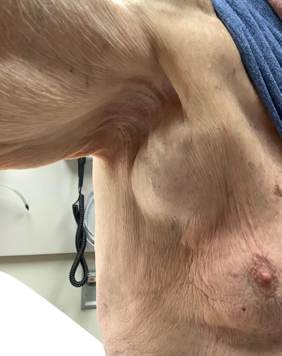
Figure 1. A presentation of right axillary mass is shown.