


Chicken Pox Rates Down Since 2-Dose Vaccination Program Began
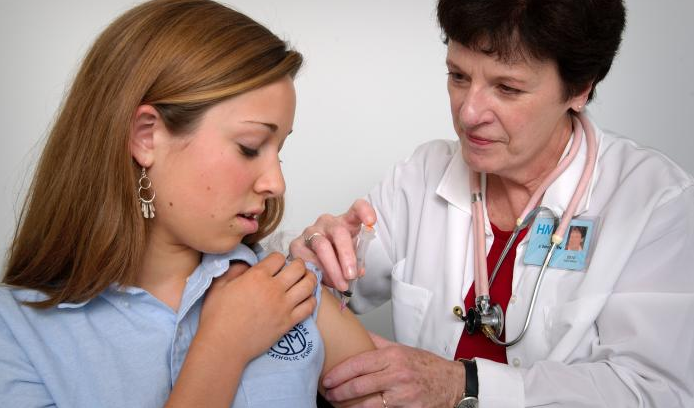 Since the 2006 implementation of the 2-dose varicella vaccination program, rates of chicken pox have declined dramatically across all ages, including infants, according to a study conducted by the Centers for Disease Control and Prevention.
Stephanie R. Bialek, MD, MPH, of the Centers for Disease Control and Prevention in Atlanta, and colleagues analyzed data from Antelope Valley, CA and West Philadelphia, PA, measuring both varicella incidence and vaccination rates. From 2006 to 2010, 61% of people living in the 2 locations had received at least 1 varicella vaccination, and 7.5% had received 2 doses.
While the percentages of participants receiving varicella vaccinations saw little change over the course of the study, the number of those receiving 2 doses rather than 1 dose rose from 56% to 92% in children ages 10 to 14 years, and from 11% to 31% in those age 15 to 19 years.
Rates of varicella incidence in Antelope Valley and West Philadelphia dropped 76% and 67%, respectively, since 2006 and 98% in both sites since 1995.
Notably, rates saw significant declines among infants too young to be vaccinated, and adults, in which vaccination levels are low.
“Declines in incidence across all ages, including infants who are not eligible for varicella vaccination, and adults, in whom vaccination levels are low, provide evidence of the benefit of high levels of immunity in the population,” they concluded.
–Michael Potts
Reference
Bialek SR, Perella D, Zhang J, Mascola L et al. Impact of a Routine Two-Dose Varicella Vaccination Program on Varicella Epidemiology [published online ahead of print October 7, 2013]. Pediatrics. (doi: 10.1542/peds.2013-0863)