


Digital Health Coaching Shows Promise for Enhancing Self-Efficacy in Acute Myeloid Leukemia
Key Highlights:
- Patients with acute myeloid leukemia (AML) who received digital health coaching showed a non-significant mean increase of 7.03 points in self-efficacy (Cancer Behavior Inventory scores) at 30 days, compared with a decrease in the control group.
- No statistically significant improvements were observed in self-efficacy or other patient-reported outcomes among patients with chronic lymphocytic leukemia.
- Despite being underpowered, the study demonstrated feasibility and suggested a potential benefit of digital health coaching in patients with newly diagnosed AML.
- Study limitations included low enrollment and high attrition, largely due to challenges imposed by the COVID-19 pandemic.
In a single-center randomized pilot trial evaluating the impact of digital health coaching on self-efficacy in patients with newly diagnosed leukemia, modest, non-significant improvements in self-efficacy were observed in the acute myeloid leukemia (AML) cohort. Patients with AML receiving the intervention demonstrated a numerical increase in Cancer Behavior Inventory (CBI) scores, suggesting enhanced self-management capabilities. In contrast, the intervention had no significant effect in the chronic lymphocytic leukemia (CLL) cohort.
Given the burden of physical and psychosocial symptoms experienced by leukemia patients—often exacerbated by intensive treatment regimens—the ability to promote self-efficacy has become a critical component of supportive care. Prior studies in solid tumors have shown improved outcomes through symptom monitoring and electronic health interventions. However, less is known about the role of digital health coaching in hematologic malignancies. This study sought to explore whether a structured, patient-centered coaching program could enhance self-efficacy and patient-reported outcomes in leukemia populations.
This randomized controlled trial enrolled 147 adult patients with AML or CLL within 3 months of diagnosis, assigning them 1:1 to either a digital health coaching program or standard care. The digital intervention was led by trained health coaches using personalized goal-setting and weekly wellness themes, and included 60 scheduled engagements via text, phone, or email over 90 days. Self-efficacy was measured by the CBI, with additional secondary endpoints including symptom burden (MDASI) and quality of life (FACT-G, FACT-Leu). Due to the differing clinical profiles and treatment intensity of AML versus CLL, analyses were stratified by disease subtype.
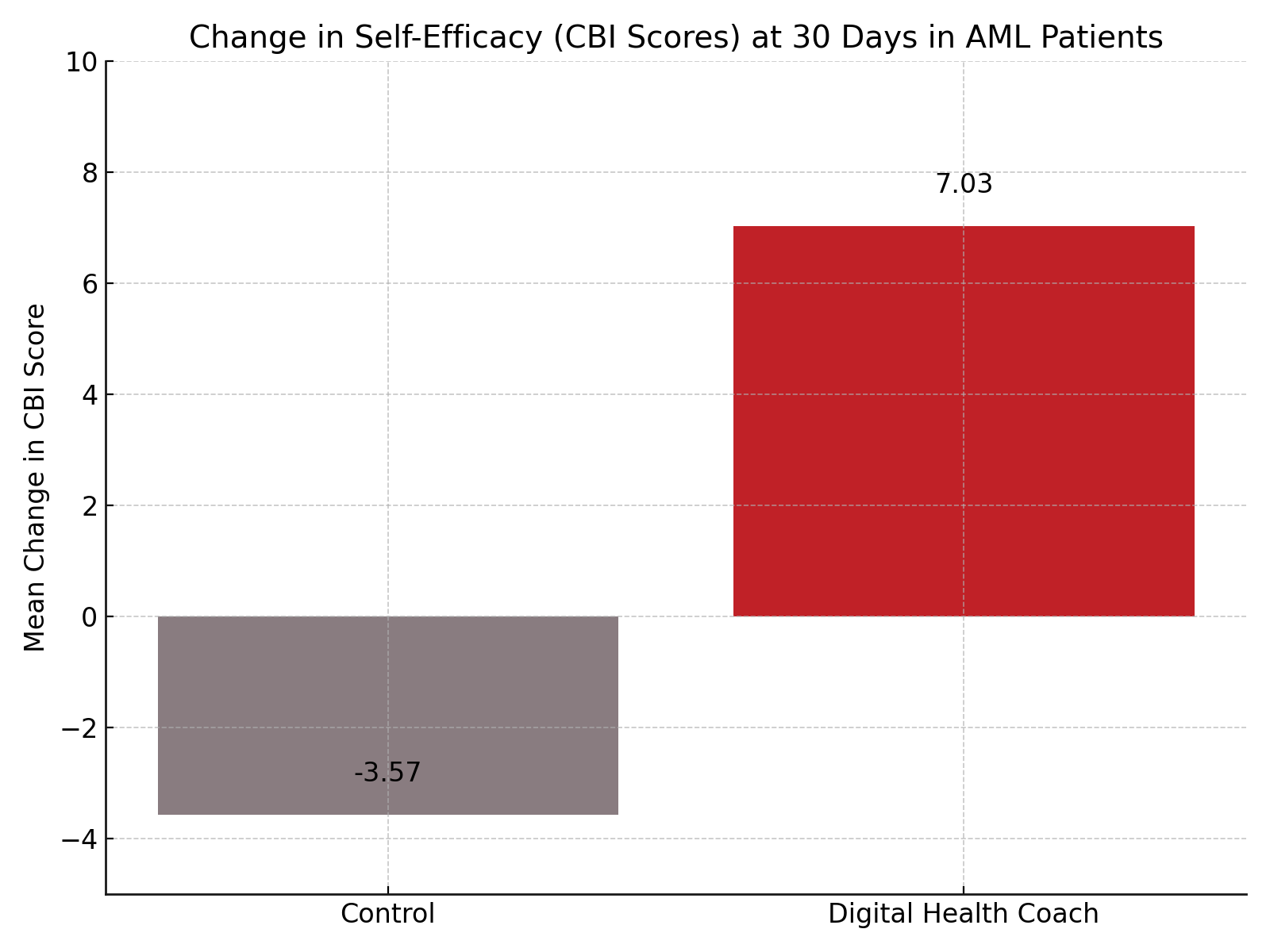
Among 37 AML participants, a mean CBI score increase of 7.03 was noted at 30 days in the intervention group compared with a decrease of −3.57 in the control group (P = .219). The greatest domain-specific improvement was seen in managing side effects. For the 110 patients with CLL, both groups showed minor increases in CBI scores (3.46 vs. 1.43), with no significant difference (P = .556). Linear mixed model analyses over the full 90-day period supported numerical but non-significant improvements in self-efficacy and patient-reported outcomes among AML patients receiving the intervention, while no meaningful effects were observed in the CLL cohort. Engagement with the digital coach was high across both groups, with text messaging as the predominant communication method.
The study was limited by low accrual (only 29% of target enrollment) and high dropout, particularly in the AML cohort, which was attributed in large part to the COVID-19 pandemic. The small sample size and high attrition restricted statistical power, precluding definitive conclusions.
“There were numerical, but not statistically significant increases in self-efficacy metrics in AML patients who received digital health coaching,” the study authors concluded. “Although this trial was underpowered due to enrollment limitations during a pandemic, digital health coaching may provide benefit to patients with hematologic malignancy and warrants further investigation.”
Reference:
Marvin-Peek J, Shelton V, Brassil K, et al. Effect of digital health coaching on self-efficacy and patient-reported outcomes in individuals with acute myeloid and chronic lymphocytic leukemia: a pilot randomized controlled trial. Acta Haematol. 2025;148(2):233-243. doi:10.1159/000539756