


Diversity, Equity, and Inclusion in Health Care: Women Leaders in Medicine, Ep. 13
This podcast series aims to highlight the women leaders in medicine across the United States. Moderator Jaspal Singh, MD, MHA, MHS, interviews prominent women making waves in their field and breaking the glass ceiling. Listen in to gain insight on the leadership lessons learned.
In this podcast, Jaspal Singh, MD, MHA, MHS, interviews Jonisha Brown, MD, Emily MacNeill, MD, and Solange Benjamin, MD, about central tenets of diversity, equity, and inclusion, efforts being made to address health inequity in medicine, and personal challenges in medicine.
Additional Resources:
- Rosenkranz KM, Arora TK, Termuhlen PM, Stain SC, Misra S, Dent D, Nfonsam V. Diversity, equity and inclusion in medicine: why it matters and how do we achieve it? J Surg Educ. 2021;78(4):1058-1065. doi.org/10.1016/j.jsurg.2020.11.013
- Enders FT, Golembiewski EH, Pacheco-Spann LM, Allyse M, Mielke MM, Balls-Berry JE. Building a framework for inclusion in health services research: development of and pre-implementation faculty and staff attitudes toward the diversity, equity, and inclusion (DEI) plan at Mayo Clinic. J Clin Transl Sci. 2021;5(1):e88. doi.org/10.1017/cts.2020.575
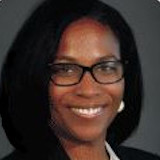
Jonisha Brown, MD, is a family medicine physician at Atrium Health CMC Elizabeth Family Medicine in Charlotte, North Carolina.
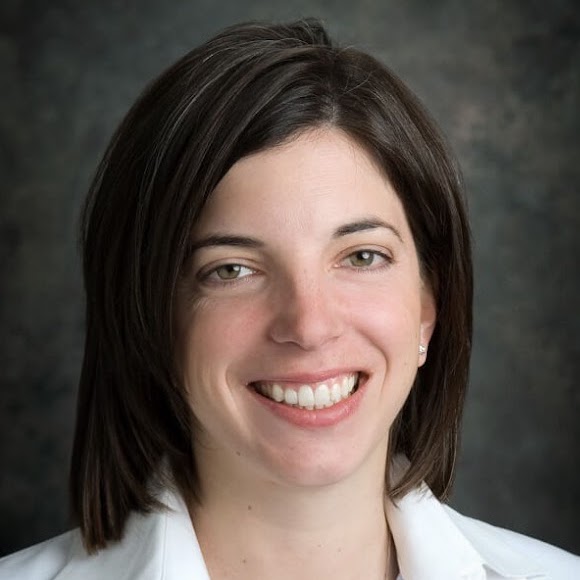
Emily MacNeill, MD, is an emergency medicine and pediatric emergency medicine physician at Atrium Health and Levine Children’s Hospital in Charlotte, North Carolina.
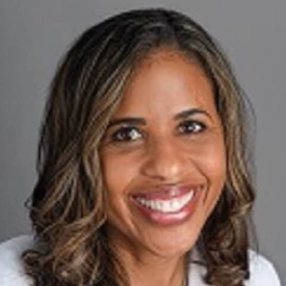
Solange Benjamin, MD, is a pediatric cardiologist and pediatric critical care physician at Atrium Health and Levine Children’s Hospital in Charlotte, North Carolina.
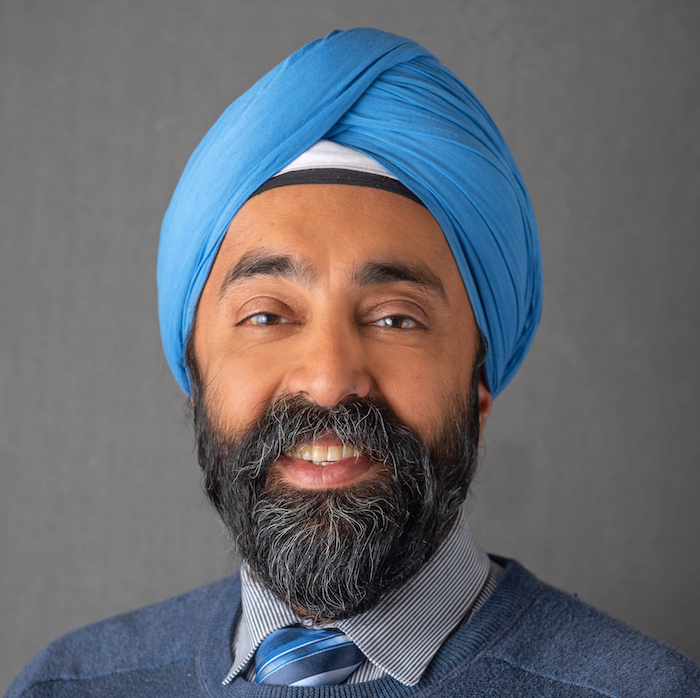
Jaspal Singh, MD, MHA, MHS, is medical director of pulmonary oncology and critical care education, as well as a professor of medicine, at Atrium Health in Charlotte, North Carolina.
TRANSCRIPTION:
Moderator: Hello everyone, and welcome to Women Leaders in Medicine, a special podcast series led by our section editor on pulmonary and critical care medicine, Dr Jaspal Singh. The views of the speakers are their own, and do not reflect the views of their respective institutions.
Dr Jaspal Singh: Well, welcome everybody, another episode of Women in Medicine. I'm Dr Jaspal Singh. I'm a pulmonary and critical care physician in Charlotte, North Carolina. And with me today, related to the topic of diversity, equity, and inclusion, I have Dr Solange Benjamin, Dr Jonisha Brown, and Dr Emily MacNeill. I'm going to ask them each to introduce themselves on today's topic, and why this topic is so dear to their hearts. Dr Benjamin.
Dr Solange Benjamin: Hi, Jaspal. Thank you so much for having me. Call me Solange, please. I am a physician at Levine Children's Hospital. I am the medical director for the pediatric cardiac ICU in the children's congenital heart center. I've been here for the past four years. I've been in the field of pediatric critical care for going on 17 years. I'm pretty passionate about women in this space, especially black women in this space. Simply because, growing up through the system, I never saw faces that looked like me. I know that there were definitely struggles and challenges that I dealt with as a woman and as a black woman. I think the biggest thing in critical care, it tends to attract stronger personalities, very decisive personalities, which for men is a wonderful thing.
You're strong, you're a good leader. You're advocating. When a woman does the same thing, a lot more negative adjectives get added to the story. I had to figure out how to navigate that. Just not having any female black mentors to turn in this space, I just wanted to make sure that anytime I see another woman in critical care, especially a black woman in critical care, I make sure that I'm available to them as a sounding board, because it's just not something that I had and I had to figure out along the way.
Dr Jaspal Singh: That's great, how you're connected to this field. I agree with you. Critical care, strong personalities, and it's sometimes hard for women. I've seen a lot of women struggle in this space, to perform their career and to do it the best of their abilities. Thank you for mentoring others and teaching others as well and passing on to your wisdom. That's fantastic. Dr Brown.
Dr Jonisha Brown: Hi, Jaspal. Thank you so much for inviting me for this, and I'm just really happy to be with these other amazing women on this call too. That's a loaded question. Why am I interested in diversity, equity and inclusion? But I really think it's really because I feel like everyone deserves the right to be seen for who they are, and to be heard. And also everyone deserves to have good health. It shouldn't be based upon what society views as important or not important. I know I shared a little bit about my story with you, Jaspal, but this really became a major focus for me after I had spontaneous coronary artery dissection, called SCAD, 10 days after I have my second child. Less about the fact that I had that, but more about how I was treated during that experience in the emergency room, really just opened my eyes to the fact that it doesn't matter how much education you have in a lot of these spaces.
It doesn't matter how much money you have in some of these spaces really. Sometimes it's just a matter of how someone sees you and if they are listening to you. For a lot of patients that are doing, regardless of how they are, where they fall in that social demographic scale in regards to money or education, they are having a lack in their health because of just the color of their skin, or because of their gender or whatever their case may be. And so really that just really catapulted me into more of a focus on diversity, equity and inclusion in health, and really being able to advocate for patients in that space so that they can be well.
Dr Jaspal Singh: Well, that's fantastic. I know you're a friendly practitioner, and so that's fantastic as well. So you get to see both sides. You can see the outpatient setting, you get to see the part of being a patient on the acute side as well. We're going to ask you a lot of questions related to your outpatient experience as well as some of the additional education you're pursuing, and how that drives you and what impact you're hoping it might have. Well, before they get to there, we'll talk to Dr MacNeill. Emily.
Dr Emily MacNeill: Good morning, Jaspal. Thank you so much for having me. My name is Emily MacNeill and a I'm emergency medicine and pediatric emergency medicine physician at Atrium Health Levine Children's Hospital. I think stories like Jonisha's are ones that break my heart, because I would say that the vast majority of people who go into emergency medicine, do so with the understanding that we take care of a community, and our community is diverse. We pride ourselves on taking care of everybody, whatever their need, at whatever time, but we fall short obviously. And you can't work in the emergency department without seeing structural racism, and gender inequities. From violence to health inequities. It is just an environment that is ripe for seeing how structures impact individuals, and what impact the healthcare system can have on those individuals. So that's how I got engaged in this work. And it's a privilege to be here. Thank you.
Dr Jaspal Singh: Oh, that's fantastic. It's a great introduction. Thank you all for sharing all that with us. So we're going to take a deep dive in. Diversity, equity and inclusion has become a very popular topic. A lot of people don't know really what's driving that popularity. What are some of the take takeaways? Some people have told me it's way too much of this space that we're talking about, and we need to get back to just taking care of patients. Talk to us about, what are some central tenants? What do you tell people like that when they say, "You know what? I have these DEI initiatives, diversity, equity, inclusion initiatives. I really think we need to double down on these." What do you tell them? I'm going to go backward this time. Emily, what do you tell them why they should pay attention to these issues?
Dr Emily MacNeill: One, because we don't make widgets in medicine. We interact with people. We interact with all people, everybody. I think that for those who are scientific minded and just want to see the numbers, I talk about the data. The data shows that we have life expectancy differences that are appalling. We have outcomes differences that are shameful. The data shows us very clearly that we don't provide equitable care, and we have inequitable health. Now, there's a lot of nuances in that statement that I'll ignore for the time being, but we also know, and industries and corporations have known this long ago, that diversity in teams is important. It needs to be fostered. Inclusive and diverse teams are more successful. They make more successful organizations. We know biologically that it's true. Monoculture does not work.
It's short term, very successful, but long term environments are not meant to be monocultures. To have a diverse biosystem in medicine, we need to nurture that diversity. We need to help all of that diversity thrive, or we are fragile. And so we care for a diverse population. We need a diverse group of people providing that care. We have a lot of inequities that we need to harness. I think that depending on where I feel like people are coming from, I really try to bring them into what is our ultimate goal, which is caring for people. I think that there's enough data out there that shows that diverse teams and having diversity in providers, improving care is enough, that it can convert most people given enough time.
Dr Jaspal Singh: That's a great framework. I love it. I think it's a nice way that you're anchoring on the needs of the patients that we serve, and that diversity is needed. I'm going to come back to that in a little bit. I want you to think about like, "Well, why don't we just train people and they'll take care of diverse needs? Why do we need people of different color, look different, think different than us. We can just train people up and we can take care of these people with their needs." But I'll come back to that a little bit, because you mentioned data. I think that as you said, compelling. The data are compelling about across disease states. Whether it be cardiovascular disease, other diseases. For our audience, is pulmonary critical care needs. So I'm going to move it over to Jonisha, talk to us a little bit about what you know about the data related to asthma or other types of pulmonary disorders in the outpatient space. And what data are there? What signals are there that we need to pay attention to?
Dr Jonisha Brown: Well, we know that for a lot of chronic diseases, we have decreased or poor outcomes with patients who are from different minority groups. And sometimes you can look at that as a health disparity and really put the onus on the patient. But quite honestly, a lot of issues come down to really the ability to create an urgency for the patient to be able to comply with certain protocols and medication regimens and things like that. And that really gets me down to say that at the crux of all chronic disease management, you really have to establish a relationship with the patient.
And so I really feel like in a lot of these chronic diseases, you have these health disparities that show that there are poor outcomes with these minority populations, but really what it is a reflection of sometimes our inability as providers to build relationships with patients, to be able to provide knowledge for them to best care for themselves in regards to the diseases that they're struggling with. So if there was one thing that I would say, other than ditto to what Emily just said in regards to taking care of our patients, it's really that we need to provide more education in regards to how to build relationships between providers and patient when they're discarded for whatever reason, to be able to partner in that space to help them with their healthcare.
Dr Jaspal Singh: That's great. I think you're a clinician, so I'm sure you see that asthma data are compelling. Even if you control for socioeconomic factors, raced in terms of worse outcomes. When we read pulmonary function tests, they're race adjusted, but those in race norms, who knows where they came from? We're finally paying attention to that after decades of doing what might be the wrong thing. And now we're trying to reconfigure all our equipment, all our systems because there's such a deep institutional cultural, systematic biases that are hard to figure out, and we need to re-engineer how we look at things. The one I thought about was, I just heard yesterday that... something that struck me was sickle cell disease, which is horribly underfunded, and yet much more prevalent than cystic fibrosis.
Yet cystic fibrosis has a tremendous means of getting fundraising, research dollars, and such. So it's very interesting how the biases are very profound in academia for the diseases and the patient care associated with that. Solange, you work in some other... the turban I wear, which is a critical care space. Shift from the outpatient to the inpatient a little bit in acute care, but you work in pediatrics. And so you get to see several generations of what you're seeing. Tell us what you're seeing and build on the data piece if you don't mind.
Dr Solange Benjamin: Thanks, Jaspal. I work in pediatric critical care. My primary interest is pediatric cardiac critical care. There's been a lot of work and disparities in this space. We know that there have been disparities in cardiac critical care. In 2001, there was an article published showing that between 1979 and 1997, there was a gap in terms of mortality between white and black children. More disturbingly, that gap has not closed over that period of time. Over time, we're still seeing post-op mortality rates that are higher in black children, higher mortality rates, longer lengths of stay, increased complication rates in black children. More recently, this high mortality related to failure to rescue. When we look at disparity, you have to ask yourself, is it access to care or allocation of the care?
I think the good thing about big data that a lot of societies and organizations are starting to harvest now. SES, PC4. We have the ability to look at longitudinal data and try to figure out, is it just related to the fact that they live further from the hospital? Is it related to the fact that they live in poorer neighborhoods? And so their referral pattern is to a hospital that may not be operating and have as great outcomes as other hospitals. Is there an intrinsic bias in terms of when we see a patient in the hospital in terms of how we respond to a child that needs to be rescued. So I think the time is right and the ability to look at data is right, and the spirit is willing. I think the important thing is... you touched on this, is to make sure that when we look at this data, we don't say, "Oh well, it's data and we're going to basically risk adjust you because you're black. We need to make sure that what is making your outcome different is what is adjusted."
Dr Jaspal Singh: Interesting. So you're taking a deeper dive and looking at the data to say, "What are these issues essentially?" Like when you have a tough case, in any surgical case, for example. You don't just look at who the surgeon was, you look at the condition of the surgeon. You look at the outpatient, the operating room and such. And so really diving into systemic issues that might have resulted in an outcome that you don't want.
Dr Solange Benjamin: Correct. Absolutely.
Dr Jaspal Singh: And so when it comes to diversity, equity, inclusion work, we're thinking about a broader aspect of how do we take care of a patient. Not just the patient in front of you, but what brought that patient in front of you? What might help prevent the next 10 patients that look or have some similarities there, from potentially getting an adverse outcome? And so it's about taking care not just the patient in front of you, but also the population and others at risk. Is that right?
Dr Solange Benjamin: Absolutely.
Dr Jaspal Singh: That's good. That's great. That's very helpful. Emily, you and I have talked a lot about, a lot of clinicians are still filling this out a little bit, not fully understanding how much they want to embrace this work and what it takes to get there. But what do you think? I mean, give me one or two things leaders and clinicians also can do better in this space? What gets under your skin? For me, that's when a resident or trainee presents someone. Presents race as the first part of the history. It drives me crazy because we are defining someone already missing our presentation from the beginning. What do you think from your perspective are the things that get in your skin or that we can do better?
Dr Emily MacNeill: That's a great question. I will say that I think that language is so important and something that we don't pay enough attention to in medicine. The biases that we impart on one another simply by our vernacular in our day to day exchange is replete with references to people based on race and socioeconomic. So that's something that's very troublesome to me as well, Jaspal. I think that one of the things that I find very fascinating about humans in general, and I've said this in numerous occasions. Jonisha and Jaspal, you're probably tired of hearing say this, but I'm tired of clinicians not taking ownership of the power that they have to make this better. Power is something that we always see in those above us, and we never see our own. We're always passing the buck on who's responsible for these things.
We have a great role to play in this. Now, I say that with a lot of understanding that we use language inappropriately in this space all the time. It's amazing to hear people talk about health inequity, and making a difference on health equity, when the really good thing that we can control is healthcare equity. We lose the forest for the trees all the time. We say, "Well, it's not health equity." And then we look at outcomes and we say, "Well." To your point, Solange. "The children live too far away from the hospital." That's actually not the problem. The problem is the fact that we didn't build a hospital near where centers of children who get sick are, for financial reasons, which are important. But it's a very complex conversation.
We like to make it very binary. We like to make it good-bad, yes-no. The challenge with that is that we're not going to make progress unless we really embrace the complexity of it, we really embrace what our role as clinicians is. I'm an emergency medicine doctor, so I solve zero problems in the world, but what I can do is be a voice and a connecting node for patients. Whether that's advocating and administrative levels, whether that is sharing stories. That's an important role for a physician that we often lose sight of.
Dr Jaspal Singh: No, that's great. You're advocating for a very broad... embracing of the DEI work. It drives you crazy that people simplify it. They oversimplify into a series of checkboxes, and it doesn't get to the heart of the issue. It also ignores the rich tapestry that we have available to us to really address deep and meaningful connections in healthcare and to care for someone, and see them, to hear them, to do the things that you really want [inaudible 00:17:32] in life. To be seen, to be heard. That's great. That's very helpful. Jonisha, what drives you nuts? Where do you want to see our leaders and clinicians focused?
Dr Jonisha Brown: You know what? I am tired of hearing race being used as anything other than a social construct. I'm tired of that being at the forefront instead of the fact that we are all humans and that really the color of our skin really does not really hold any weight, or most diseases does not hold any weight in regards to the general things that would make you well. So that's number one. Just race just being used as anything else other than something that our society created. I'm also over people using terms that generalize patients in a negative fashion. So, "Oh, this patient's non compliant." Or, "Oh, this patient has poor health literacy." When these patients have full lives, and most of them are raising families, going to jobs, and keeping themselves alive. And these terms that we use in medicine are really terms that we are using to take away our blame of why they're not progressing.
I really would love to see in our clinics and in our hospitals, a deeper dive as you're saying, into why. This patient is not taking their medications, why? Ask the patient, what is the barrier? This patient who we say has poor health literacy. "How can I help you understand? Tell me where you're at. Tell me what you know about your disease process, and let's meet there and let's talk about where you're at and where we can go." That's what I think.
Dr Jaspal Singh:
That's great. That's wonderful. I think that's a great way of looking at this issue altogether. I think you all have given us some nice colorful aspects to look at this. Solange, I already think I already asked you what drives you nuts? Did I ask you that already?
Dr Solange Benjamin: No, but it's fine.
Dr Jaspal Singh: Oh, sorry.
Dr Solange Benjamin: ... because Jonisha's answer is spot on in terms of what makes me crazy. My pet peeve is, "This family's non-compliant. This child is obese. They don't care about what the child eats.” And invariably, as Jonisha pointed out, it's using race outside of that social construct. Unfortunately, a lot of these kids, they live in food deserts. They have housing insecurity. These families have so much on their plates. And now we have a sick child. I mean, for those of us who have kids, you know if they have an ear infection, you lose your mind. Imagine when they actually have a life threatening illness on top of all these social things. So that is my pet peeve into terms of labeling them and not doing due diligence and figuring out how we can actually change the narrative in terms of supporting them to do what every parent wants, which is the best thing for their child.
Dr Jaspal Singh: That's great. So the idea of labeling, the idea of judging. I think I hear the idea spectus, judgements made already without really understanding and seeing the individual for who they are, and the factors associated with what brought them there. I think that's very important. I think it's very important. Which brings us to the next question. Solange, start with you. What does a culture of diversity look like?
Dr Solange Benjamin: I think it's a incredibly complex question, and I think it is in terms of your hiring practices and your retention practices. And so for me, what a culture of diversity looks like, is having leaders that look like me, who reflects the population that we serve, and who embed a culture of, this is what we want to do for our patients that look like us. To make a point in that, I think it's important to that women have a place at the table, that men who are in rooms where there are no women... Like you, Jaspal. You actually make a point of putting a spotlight on women and ensuring that they have a voice in the room, because other than that, it just doesn't change. Going back to what I said as a baby intensivist, as a baby doctor, not having a mentor. So ensuring that you have mentoring programs and programs that can educate women how to become better leaders, going to be important for organizations.
Dr Jaspal Singh: That's great. You mentioned mentorship, sponsorship, the idea of finding a place to share all your experiences, and such. I think that's great. Jonisha, what does it look like to you? The culture of diversity.
Dr Jonisha Brown: I was just thinking about that question as you were talking to Solange. It brought me back to this question that a coach asked me about a job that I was in. She said, "Do you feel safe?" That was an interesting question to me because I never applied it to my job per se. I've never been at risk of being fired or anything like that, outside of that craziness, but just on the day-to-day of your job, do you feel safe? When you walk into the clinic as a patient, do you feel safe? When you walk into the hospital needing care, do you feel safe? Do you feel like people are there to save you? I mean, in medicine that is, not necessarily to save you, but to keep you where you're at, and then to improve you. Not to take away from. That safety that you are going to be treated well. I think diversity in medicine, I think it looks like that. Individual patients and individual employees feel safe and feel like it's an area where they grow, and where they can be well.
Dr Jaspal Singh: That's beautiful. The culture of feeling safe. I think you're going beyond safety and talking about being cared for. That you're being nurtured. That you're being not just safe, protected, but also cared for and developed.
Dr Jonisha Brown: Absolutely. Absolutely.
Dr Jaspal Singh: If you're an employee, then [inaudible 00:23:27]. If you're a faculty member, if you're a part of a network of clinicians, you're not just coming to do the job and just check the box or check the shift, that you're actually growing in a way that you want to grow, that recognizes you for who you are. That's a nice way of putting it. Both of you have nailed this. Emily, you have the last word on this, and you have the tall order of following up with those answers.
Dr Emily MacNeill: The challenge that I find is that we are so far from where we want to be. We have a lot of steps to get to where we want to be. A true culture of diversity is going to require us to move through some other uncomfortable spaces first. And those spaces are the realization that for now, we have such a historical legacy in our structures and in healthcare, that prevent our patients of color from feeling like we are a safe space. Regardless of how we practice now, we still have that legacy to undo, before we can get to a place where we can treat everybody to care for everybody. But we haven't even undone that historical legacy, because we are still so underrepresented. Not as a woman. I will say that as a white woman I struggle a little bit because we are overrepresented in medicine by our demographic.
It's really not about me as a woman. It's about, we need to rectify our current state before we can get to the place where everybody just wants to leapfrog too, which is, "I can teach you how to care for everybody." Well, you can. The challenge is, is that your patients don't feel it yet, because they sense it. They feel it, they see it. You walk into the emergency department, and the racial cast system that's in our country is incredibly visible, right there, as soon as you walk in. Our patient representatives, our staff, mostly people of color. Our physicians, mostly white. The higher you go up the care spectrum, the whiter it becomes. If you don't think patients can feel that, then you've never been in a situation where you are the one in the minority group.
It's hard. It's very painful, but we have a lot of work to do before we can get to the state that everybody wants to lead frog to. So we're have to be intentional. We're going to have to create a lot of programs that help foster trust, help foster engagement and growth and nurturing in a way that supersedes what we will need in the future. And then we also have to do it with the understanding that nothing that we create now is permanent. And it's going to need to adjust and flow just as society adjust and flows.
Dr Jaspal Singh: That's fascinating. You brought up important aspects of a whole bunch of stuff; culture, a number of initiatives, the amount of work that's involved here. I'm going to let that be. I'm going to shift a little bit. You all nailed that question. So this is personal. This whole podcast series, for those who know, my wife's a physician. I watched her struggle, and her peer struggle as we [inaudible 00:26:27] families. Her academic career had to take a back seat because of other issues. It brings us to the pandemic. What are we seeing after the pandemic? What's been focused on? Emily, you mentioned the number of women in medical graduates now is exceeding the male counterparts. And yet men are in their leadership roles. The structures. Whether you're in academic or practice, the schedules, the incentives are mostly male-centered in how they're incentivized.
No surprise, women are burning out faster than their male peers are often paid less. In academics, are less likely to be promoted, less likely to get grant funding. And yet study suggest that actually many of them are better at performing physician duties, including a recent article that suggested that female surgical outcomes were better than male counterparts. I mean, it's fascinating to me this puzzle here, that women are seen as more empathic, more caring, often better physicians and clinicians, and yet they're burning out faster. What can we do to stop this bleed? What are you seeing? Are you feeling the same stresses? Start with you, Emily?
Dr Emily MacNeill: This is something that I care a great deal about. Look at this through a historical lens of where women and men have come [inaudible 00:27:49] over the last 100 years, which is, we dichotomized male and female roles so much, that one was essentially west and the other east. What we've done is we've brought women up into a more Northern pathway, which is, our east was family, home, children, and we come into the workplace. The workplace is driven by the west. The workplace is driven by that culture because it is not distracted by anything else. We see that play out in all the data around home responsibilities and all of these things. Here's the challenge; we're not going to be able to go further west as humans.
I think that's where you see, we're trying to fulfill this role that is so valued by an institution because it's so little distracted by the objective of an institution, but women can't do it, which is I think why we burn out. What I really feel we need to focus on, because I don't know many men who want to be at a unidimensional life, is to help men move into more of a Northern position. To make it truly equitable, you can't do just bring everybody over to one extreme. You're going to have to meet in the middle somehow. So that's why we can advocate for maternity leave for physicians, and I completely agree with that.
I mean, for crying out loud, physicians, but you are never going to get true equity in the workplace if paternal leave isn't equally valued, because you're sending a very different message around what is expected of physicians. Most men that I know would value that incredibly. Nobody is unidimensional in this world. I think we've come as far as we can in terms of trying to balance work and life and family, and we need to help bring everybody into a more balanced and integrated life. That's my personal-
Dr Jaspal Singh: I may build on that. What you're getting at; You said men in this case, but I would say, almost the whole village needs support. Whether you want to have family, whether you want to have different life goals, and figuring out just sort of... rather than make women necessarily do the majority of child-rearing, which you know the data suggests. Or, I'll be honest with you, in the locker room, many male colleagues actually are in the conference rooms behind women's closed doors say, "Oh, do we really want a woman partner? They're going to take maternity leave. They're going to be wanting to get out of here to pick up the kids or come a little bit [inaudible 00:30:28]." Hear that chatter.
As a male I can say I've heard that chatter many times, and I've resented it, because I do like, to your point, picking up my kids, dropping them off when I can, and being for those brief moments, being present. And so those are meaningful. And so I think your point's well taken, but the whole village needs to embrace more of A diverse life. I like that idea. Jonisha, what are you seeing in that perspective? How was your response to all these women burning out and what we can do to potentially help in the situation?
Dr Jonisha Brown: Well, I just want to build on one thing that you just said, Jaspal, and it's the equivalent of having males act as allies in those spaces. There are a lot of males who are like you, who don't think that those comments are appropriate. So having those males in those spaces advocate for what is the right way to speak in such terms, and to explore with their concordinate groups, why those feelings are there, or how we push that needle forward. What is another female partner? What is that signal for you? What feelings does that bring up for you? So that there can be that needed dialogue that happens in those safe spaces so that people are not afraid to talk about those issues and resolve them and move forward into the future.
But I'm a firm believer in that as well, that culture does not change until policy changes. Changing hearts and minds is the work of deities, and I'm not a deity. I really feel like support for policies and procedures in place that keep in mind gender differences is very important. From white coats that fit female bodies, to... when I was a medical student, pumping in a bathroom. Pumping milk in a bathroom because there was not a space for me to pump as a medical student. Having people in those high positions even while they are still predominantly white male, having those allies in those spaces that are thinking about the policies and practices that we can put in place to protect all employees, is really important to protect from this burnout. Because my husband is a professional and I cannot get any more support from my husband. So I have a lot of support in my family, but yet and still, I still feel that burnout. It is because of those policies and procedures really not being there to support me on a day-to-day basis.
Dr Jaspal Singh: That's awesome. So policies, procedures, allies. I heard you give a lot of ideas. Really, you want true allies from all levels. I think that's great. You shouldn't have to fight every battle alone either, is I'm hearing you say, that it's really much a struggle doing it alone. That's great feedback. Solange.
Dr Solange Benjamin: I'm not sure how to top all of that. I completely endorse what Emily and Jonisha said. Just to take it from a little bit of a different angle, you touched on this Jaspal. Emily, you talked about it. In medicine, there are a lot more men now. There are certain specialties that are very female dominant. Like pediatrics. However, when you look at boards and you look at conferences, the majority of the speakers are going to be male. There's just an underrepresentation of leadership in senior positions, in medicine. The pediatric sepsis guideline group; 11 out of the 42 people were women. 11, which is crazy to me. And then the presentation of the 2020 society for critical care medicine, the Congress preliminary session included six men and no women.
I mean, it's just little things like that what would help and what has helped, I've made it a point as part of DEI committees for Pixus and for PC4, is to make sure that there is a liaison with the programming committee so that they know that there are these female speakers out there. There are these black speakers out there who are phenomenal, because they genuinely may not know that they exist. It's not necessarily malice. It's just that that connection is not occurring. I think leaders just need to be a little bit more mindful about reaching into DEI support to ensure that there's more representation for women and minorities.
Dr Jaspal Singh: I think that's great. That's well said. So you want intentional visibility, intentional attention, attention to these aspects. And so every opportunity. What I'm hearing you say, there's a right way to involve, whether it be women or it be racial-ethnic groups. Whether it be certain people who are clearly excellent in what they do, and also bring element of diversity, equity, inclusion, should be embraced. Am I saying that right?
Dr Solange Benjamin: Absolutely. Thank you Jaspal for power phrasing.
Dr Jaspal Singh: No. This stuff is important. I’m just trying to understand it better so I can do my part better in this space. Well, that’s all the time we have. I wanted to thank the three of you for giving me a lot to think about in this space, and how to be better advocates, better allies, and better colleagues to my fellow clinicians and teammate. Do you have any parting words or thoughts for any of us? I’ll just start with Emily.
Dr Emily MacNeill: I was listening to Jonisha and Solange who has so many beautiful insights. It reminded me of the women's suffrage movement in this country, where you have to realize that women could never give themselves the right to vote. It had to be given. That power had to be given to somebody. And so for those who feel powerless in these scenarios, we all have a lot of power. It is our duty as people who live in the privileged world of medicine, which we all do, is to ensure that we are giving as much power to others as possible because it's certainly something that has to be given from above.
Dr Jaspal Singh: Thank you. Jonisha.
Dr Jonisha Brown: Well, first Jaspal, I just want to say you are already a great teammate. I really have appreciated all of the support that you have given me, so I just want to say that to you. But I just feel like in general for this topic, I just want us to move from a space of wanting health equity, and wanting to decrease health disparities, and move to a space where we are anti-inequity. Actively doing things and creating the spaces and policies that will not tolerate anything less. And so hopefully we can see that in the future with all the new advances and all the hot topics that are in the space right now.
Dr Jaspal Singh: Oh, that's fantastic. That's well said. I like that. So the building on the anti-racist theme to be anti-inequity. That's wonderful. Solange.
Dr Solange Benjamin: Thanks, Jaspal. I just wanted to echo what Jonisha said, that I really appreciate all your work in this space. This is black history month. I think I would be remiss if I didn't point out that black females represent 2% of all women in medicine. I think there's so much work to be done in terms of diversity and having us reflect the people on the population that we care for. It goes to everything that everyone has said here. Having allyship, it's not something that we can take. It's something that we all have to work for and have support in order to get to that space.
Dr Jaspal Singh: Well, that's great. And thank you all for taking the time and for being such great colleagues in this space, especially, and even outside the space. You're obviously all very talented clinicians and leaders. And so can't thank you for all that you've done for everybody. And also making things better for those after us, making the systems better, making it better for the patients and the communities that we serve. And that's very meaningful. I just want to thank you on behalf of Consultant360. We talked a lot about a lot of different things. So for our audience, some key takeaways. The ideas of embracing diversity, seeing each other. Look at the rich tapestries of diversity, defined in different ways, but really try to help each other feel safe, supported, and really grow together as a community.
Patient outcomes are very complex, but diversity, equity, inclusion, clearly affect patient outcomes. They affect community outcomes. When the problems are complex, but rather than simplify them, let's really dig deep, roll up our sleeves and really address the issues at a meaningful level. Did I miss anything else? All right. Well, it was great having the three of you. On behalf of Consultant360, I want to say thank you, and thank you to our listeners. Take care and have a great day.