


COPD: Women Leaders in Medicine, Ep. 14
This podcast series aims to highlight the women leaders in medicine across the United States. Moderator Jaspal Singh, MD, MHA, MHS, interviews prominent women making waves in their field and breaking the glass ceiling. Listen in to gain insight on the leadership lessons learned.
In this episode, Dr Singh interviews Meilan Han, MD, MS, University of Michigan (Ann Arbor, MI) and Jean Wright, MD, MBA, formerly Atrium Health (Charlotte, NC) on the management of COPD, including recent updates to COPD treatment guidelines, increasing public awareness, and diagnosing the disease early.
Additional Resources:
- About Jean Wright. TEDxCharlotte. September 2022. Accessed March 15, 2022. http://tedxcharlotte.com/speaker-jean-wright/
- Han MK. Breathing Lessons: A Doctor's Guide to Lung Health. W. W. Norton & Company;2021.

Meilan Han, MD, MS, is a professor of medicine and chief of the division of pulmonary and critical care at the University of Michigan (Ann Arbor, MI).
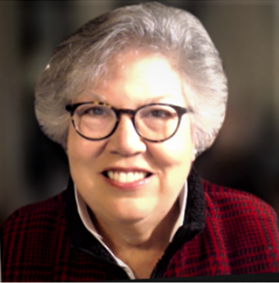
Jean Wright, MD, MBA is an anesthesiologist-intensivist and the former chief innovation officer at Atrium Health (Charlotte, NC).
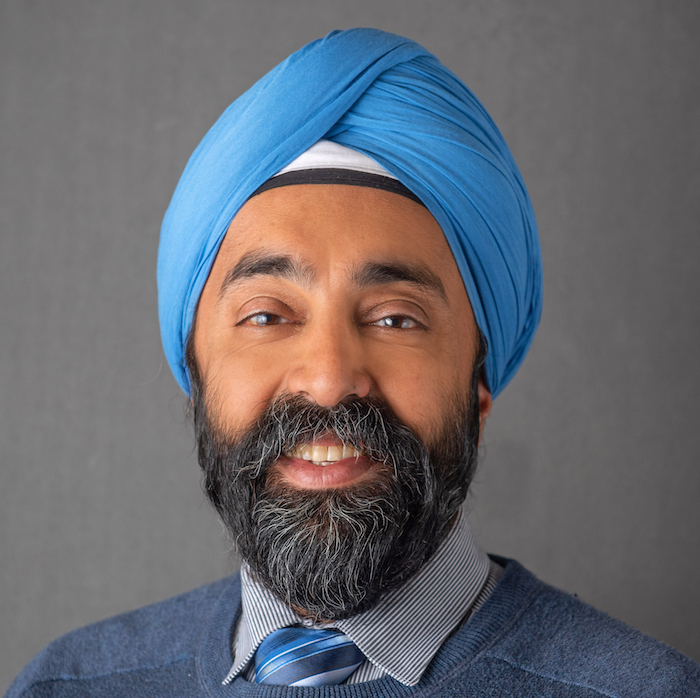
Jaspal Singh, MD, MHA, MHS, is medical director of pulmonary oncology and critical care education, and a professor of medicine, at Atrium Health (Charlotte, NC).
TRANSCRIPTION:
Moderator:
Hello, everyone, and welcome to Women Leaders in Medicine. A special podcast series led by our section editor on Pulmonary and Critical Care Medicine, Dr Jaspal Singh. The views of the speakers are their own, and do not reflect the views of their respective institutions.
Dr Jaspal Singh, MD:
Hi everybody. Welcome to Women in Medicine series on Consultant 360. I'm Dr Jaspal Singh, I'm a Pulmonary and Critical Care physician in Charlotte, North Carolina. And with me today, are two eminent speakers, I going to have a great conversation with Dr Jean Wright and Dr Meilan Han. We'll start with you Dr Han, introduce yourself.
Dr Meilan Han, MD, MS:
Thank you. It's a pleasure to be here today. So my name is Meilan Han, and I am a Pulmonologist Researcher at the University of Michigan. I actually recently took over as Chief for the Division of Pulmonary and Critical Care, but relevant to today, I'm also a member of the Gold Committee that writes management... we don't like to say guidelines, but treatment recommendations for COPD. How about that?
Dr Jaspal Singh:
That sounds great. Great to have you here, and congratulations on being Chair of the University of Michigan.
Dr Meilan Han:
Oh, thank you.
Dr Jaspal Singh:
Right. And Dr Wright.
Dr Jean Wright, MD, MBA:
Hi, it's great to be here. Every conversation with you Jaspal gets my brain geared up, so I'm looking forward to this. Clinically, I'm an anesthesiologist and intensivist, but I spent the last 10, 12 years in innovation. And in that role, really began to learn about COPD, and as we often refer to it as the silent or invisible epidemic. So, unlike the 2of you, I don't practice in this space, but instead, I look at systems approach, like how do healthcare systems build capacity, and think about COPD. Jasper, you've watched how we've wrestled to try and get it on the front of mind of clinicians and administrators, and then, along with Meilan, we serve on the COPD foundation board. So we're always thinking about advocacy. How do we get the word out? How do we increase NIH funding? So I'm on that side of the spectrum.
Dr Jaspal Singh:
Well, that's fantastic. It's going to be an awesome episode today. So let's start with Meilan, we're going to use first names, just because it makes it easier to talk. Meilan, talk to us a little bit, the Gold Guidelines have gone through multiple iterations, and as a clinician, I oftentimes to get confused. Which guideline I'm using, whether I'm doing anything, my PFT is right, my diagnostic treatment approaches. What do you think most clinicians need to pay attention to today in the newer guidelines that they may not have really picked up?
Dr Meilan Han:
Yeah. I think it's been hard for us to all stand top of general med ed in the past few years while just dealing with the pandemic and trying to figure out how to treat COVID and manage homeschooling, if you're like me. So, there hasn't been major, major changes, but there have been subtle incremental changes. We're actually due for what we call a major update this year, and we just voted on which topics we're going to make, and there's actually quite a bit, but I think that some of this, some of the general thought process is the same with incrementally adding either bronchodilators or inhaled steroids as appropriate to treat either dyspnea or exacerbation. So, if people haven't looked at the Gold Document in a while, it really does have two pathways for treatment. Now, whether your goal is intensification of treatment because of shortness of breath, or is it because of exacerbation.
So that might be a new concept for people. Another thing is that, stratifying by eosinophils really is now part of our standard rubric, and for patients, essentially the higher the level of the eosinophils, the more likely a patient is to benefit from inhaled steroids, particularly with respect to exacerbation reduction. So that may or may not have reached everybody. The other thing that maybe people missed, is that we do have several single device, triple therapy inhaler options for patients now, but one of the most exciting things about that data to me, honestly, it's not just that triple therapy prevents exacerbations as compared to either dual combination in terms of ICS LABA or LABA LAMA combination bronchodilator, but that, the data from both ethos and impact to the large CBD trials that have been done in the last few years, both showed mortality reduction for these frequent exacerbators.
So that is another message that I'm not sure has actually trickled down to everyone as well. And I think the bottom line or the hope, Jean said earlier on, part of our goal of the COPD foundation, is to raise awareness. I think both Jean and I recognize that for a while now, we've really had a lot of therapeutic nihilism when it comes to COPD, particularly from the primary care provider group. And one of my hopes, was that with this data on mortality, it would really make people stop and say, "Okay, I have to get this right. I actually have to make sure I have patients on appropriate therapy, because if I don't, there's actually a mortality benefit here." So, I can't say that that's actually translated. And I feel like there has been so much noise with the pandemic and other messages bouncing around in the echo chamber, that I feel like that message has gotten a bit lost.
Dr Jaspal Singh:
Think that's great. So you started out talking to us about sort of what to pay attention to. Most it's the same, for what you said, sort of like paying attention to what you both label as the silent epidemic. So recognizing it, giving attention to it, put some evidence behind it, the evidence behind the care plan that you develop, and sort of thinking about the aspects of endocrine approach to other using treatment for symptoms versus exacerbations, and how there might be a little bit of a differentiation, which wasn't there before, eosinophilia or eosinophil or sputum, whichever one you can hopefully get, is that right? Am I thinking that wrong?
Dr Meilan Han:
Well, actually there's some debate on this. It's so hard to get sputum. So, sputum's probably better, but because it's so hard to get sputum, most people are recommending blood. There's two tricky things about eosinophils. One is, does it predict exacerbations? And it does seem to predict exacerbations, but it seems to be better as a predictor when you're not looking at patients on inhaled steroids. Once patients are on inhaled steroids, it gets a little bit more complicated. Where Gold really recommends its use, is as a stratifier for use of inhaled steroids, in terms of identifying a subpopulation that benefits. So when I talk about thinking about eosinophils, it's really trying to identify who would get exacerbation reduction benefit with ICS.
Dr Jaspal Singh:
I have a hard time getting sputum. So I'm going to stick with the serum for now until the lab tells me, I can finally not get a midnight call saying “what are you ordering here?” And that's great. And then the newer combination of inhalers, which are obviously, it's nice to see, you almost personalize the therapy a little bit more than we ever did before, which is nice. But that brings us to sort of a second sort of a nice segue into, with other things that are happening. And Jean, going to turn to you a little bit. Meilan mentioned labeling. The aspects of sort of identifying and labeling patients. A sense nihilism, a sense of sort of defeat or sort of like, it's their fault for smoking and being around certain exposures. And then has that changed from what you are seeing in your world?
Dr Jean Wright:
I don't think we've seen the change yet from the smoking. It's just a smoker's disease, but as physicians first, and then the population on a broader spread begin to realize, "Oh, it's not just a smoker's disease." I think that mindset will begin to change, I mean, frankly, that's why some groups like COPD SOS are focusing on the firefighters from 9/11, because they're trying to move that stigma to essentially bringing it to a level platform of, if you breathe, you could be at risk for COPD. Yesterday, I was watching the atrocities in Ukraine, and my children were sitting there with me and they were all teens. And I said, "That's the start of COPD for some of those people. So those buildings that were being destroyed…Meilan is very much involved in the COPD gene study. We know now that there's a enormous genetic impact and it's helping us identify people that have not only an early disease, but a fast and accelerating pattern of disease.
And I guess one of my passions is to try and get primary care physicians, not to wait till the patient's symptomatic. We've gotten past that in breast health and cardiac health. We don't wait, literally till there's peau d'orange on the skin of a woman before we order a mammogram. We need that simple, basic change in public health thinking, to start looking for it before we find symptoms. So that idea of an early PFT, whether it's at 40 or 50. Or you guys who are the clinicians would know, I'm a pragmatic person, I'm kind of like, if we do a peak flow, could we have you blow out a birthday candle, whatever. So we could really begin to raise awareness for the people that we need to follow into their older ages.
Dr Jaspal Singh:
That's well said. So the idea of finding them early and really just almost relentless ways of getting them and identifying them and not just this sort of just wait and wait and wait. And we see that way too often. Now, along that way, a lot's changed in the COPD world. It may not be necessarily inhaler related, but things like endo bronchial valves or lung cancer screening. And I find, so I'm a pulmonary critical care person who, I do a lot of lung cancer work. And so we see a lot of patients with lung cancer screening. I also happen to sort of play in the valve space, and it's been very interesting to me, from a COPD perspective relative to this conversation, not about the valve, but the patients bringing both of you in, one, to mail on to your earlier point.
Patients are more aware now of their diagnosis. They're seeking out newer therapies. They're seeking out clinicians that want to have an active involvement or have something. And the clinician on the same side, there's a sense of nihilism. Somewhere like, "Well, this therapy doesn't work or this or this doesn't work, or maybe fine if you want, I'll send you over to have some eval." Well, if I'm that person evaluating them, what I've noticed is, we don't have a checklist. We don't have a standard. They come, many of them without PFTs, many of them without ever thinking about pulmonary rehabilitation, they've done auction supplementation, but they've never been told to exercise. They've never been told to evaluate their total capacity or look at other measures of physical fitness, nutrition, and other aspects. And why do you think that is? Jean, start with you?
Dr Jean Wright:
Wow. I wish I knew, because I think we could crack the code. I would probably put it almost all the way back to med school, and how we begin to teach people about lung disease. It's almost as if, if I've used my stethoscope, I'm done and I can check the box instead of realizing that that's a ridiculous evaluator of what's really going on internally. I also think besides the med school approach, getting to the public, it's a bit like cheating, but it's really effective. I mean, if you think back to Bob Dole and the Cialis ads or other people that came on every time I drive into our healthcare system, I pass at least three billboards, one for pre-D screening, one for colonoscopy, and one for Hep C. Where is that billboard for COPD. They could get the awareness passed.
We did some interesting pilot work using social media, simple Facebook screening, where we placed some questions on Facebook, and we didn't link it to, they didn't know exactly where it was coming from, but we were looking at click-through rates like, are you able to walk as far as you'd like to, and does grocery shopping tire you? We had an enormous spike in click-through rates, and we realized we could find people quite quickly, and very economically, using social media. So, there's a variety of tools that are at our disposal, that we have not gotten smart about like other disease leaders have. But Meilan and I were on an advocacy committee yesterday. It was a bit like taking a drink out of a fire hydrant, because I think people really do want to crack this. I mean, frankly, that's why we have a Ted Talk out about it now. Is trying to find different ways to message and get to the public, so they're not just dependent on their doctor asking.
Dr Meilan Han:
If I could, yeah, jump in here, Jean. At the beginning of the pandemic, so if we dial it back almost exactly two years now, a lot of people had questions about their lungs, right? And all of a sudden, people were asking questions and in ways that they'd never had before. They were can considering things that they had never thought about before, like what is a mechanical ventilator and things like that. And I actually had this fun opportunity at the beginning of the pandemic, I think some of you know, I actually wrote a book on how we breathe, breathing lessons. And one of the hopes that I had with that, was really to educate the public on just what we're talking about and to take this message to the public, to try to get the public to care.
And I think that there's been so many things that have happened during the pandemic that highlight why we all have to care about respiratory health. Why this is not just an issue important to a tiny sub segment. I mean, well, we always knew it was not a tiny sub-segment, but it's not just “other,” right? It's me too. It's, when we look at risk for severe COVID. When we look at, thinking back to your comment about medical school Jean, we don't really talk much at all about all the other risk factors that we need to talk to patients about when we're trying to prevent sensitivities. We talk about smoking, and that's it. We don't really talk about all the other things that like, dirty dusty jobs and think about all the women that are hairdressers and things like that.
We don't talk about environmental air pollution. We don't talk about respiratory infections in children. And so, I do think that there is an opportunity here to raise general awareness by removing just the COPD-specific thinking about this, and trying to move it into a bit more general conversations around lung health. To try to just engage the public, I think in understanding, and then we can move towards these more specific awarenesses around COPD specifically.
But, I will say, I was really hoping that we would have the opportunity to move the needle during the pandemic and it just hasn't happened yet. And I worry that we've missed the moment. I hope that we haven't. I think hopefully, there will always be this new awareness and new thought about how do we prevent lung disease? How do we screen for lung disease? Why should we care about lung disease? But to be honest, I think we, as a pulmonary community, have not made enough noise. Now part of that is we've all been really busy taking care of patients in the hospital. But, now is the time where I think we really do have to organize to try to get from the top down, everyone really thinking about lung health as a priority.
Dr Jaspal Singh:
I think that's really well said.
Dr Jean Wright:
Meilan's been really faithful about making the COPD foundation aware of that. And when you think back to HIV, and other public health concerns, there was a moment to seize and to leverage, and that's in fact how a lot of NIH funding came about. One thing that has crossed my mind during this conversation is, when women get the disease, they often get it earlier, and they have a higher burden of illness. And if you're a mom, if you're in a career, you've learned to just tough it out and to put up with it. And we had ads in our youth about you've come a long way, baby. The problem is, the outcomes of that, were really detrimental to us. And I think, I know this is a broadcast about women in medicine, but women can be a powerful force if educated and organized. And I think we ought to leverage that
Dr Jaspal Singh:
That's really well said. And I think it's a nice segue into, what is the fallout of all this? I mean, I'm thinking about, as you're talking about air pollution, you're thinking about, I'm thinking about all the firefighters that are out in the west, and inhalation exposure that they're getting in addition to maybe also tobacco use or other tobacco products. I'm thinking about teens with tobacco products that are now popular, those vaping and such. Starting to think about the effects of Jean, you mentioned Ukraine, but also other world conflict. We saw the 9/11 population have significant health sequela afterwards. And I do worry, like Meilan earlier said, have we missed the moment? Some things have changed since the pandemic, and something we've found out. I don't know if you want to comment about other things that you're seeing with the pandemic in terms of like what you saw clinically because of virtual visits, attention, lack of PFTs, lack of ability to assess for basic stuff. Anything else I'm missing?
Dr Meilan Han:
Well, gosh, my brain's going in a million different directions. So, one thing I just wanted to comment on was, you are talking about wildfires so, one of the interesting things, I don't know if you, I'm still obsessed with this study, but there was a study from Harvard that showed just in the American west where we saw the increased wildfires last summer, an excess 20,000 COVID cases and 750 COVID deaths related to the wildfires.
Dr Jean Wright:
Wow.
Dr Meilan Han:
So that was just an exposure we measured and could actually assess. What about all those other unmeasurable exposures that we're all getting every day? And I just keep thinking, does that help to explain why person A got mild COVID and person B got severe COVID. I am certain that either full blown lung disease or some degree of lung inflammation or lung injury that people were not aware of, contributed to the burden of disease that we're seeing from COVID.
So that, to me, is a real eye opener. And I think really has to be one of the messages that we're pushing is I think that there's a lot. There's not only, actually, I said this recently and I was so frustrated with this. Actually recently, I wrote an op-ed in the LA times about it but, and I think the editor might have pulled this out, but what I would wanted to say was, that lung fragility is the Achilles heel that we did not know we had, right? This is why patients are dying. We didn't have good treatments before, we don't have good treatments now. And guess what, with all the investments that we've made into vaccines, and to COVID-specific treatments, we have still seen very, very little investment into screening for lung disease, treating acute and chronic lung diseases, fibrosis repair, all these things that we as pulmonologists know are important.
So that's sort of one thing that I've been thinking a lot about, but you had also asked something about how's my interactions with patients changed. It's interesting. There's just so much there to unpack as well from one, patients didn't have as many exacerbations because they were all isolating. And so I think it taught us something about how do we maybe help prevent CBD exacerbations for our patients in the future. And maybe there is some permanent mask wearing that needs to be in place. But we also at the same time saw some of the social devastation for our patients in terms of anxiety and just from the complete social isolation. We also saw, speaking from a healthcare disparities angle, it was like a dual edged sword, because on the one hand, many of my COPD patients were always having problems with transportation anyway.
So being able to switch to virtual is nice. Having said that, none of them had the appropriate tech. So they couldn't log onto their portals. I was literally registering people for COVID vaccines myself online during visits. They want us to do these computer visits and a lot of my patients just can't do it. They're just don’t own a phone. And then some of the more robust things that we rely on like pulmonary rehabilitation. We could have a whole show on that because, many of them couldn't access it during the pandemic, but guess what? They couldn't access it before, because many of them, it was too far, not convenient. Then we dangle this carrot of, well, maybe we can get virtual rehab on board and and maybe there would be a pathway forward for that.
And now, the last I'd heard, there's concern about reimbursement and it may, despite the NIH recently having an entire workshop on it, I'm not sure where that's going, if anywhere. So I guess, it's highlighted for me, a lot of the challenges that our COPD patients have. And again, I'm a bit frustrated, I mean, virtual care is an advance. I will say that. But I still think there's just so much more we need to do to help our COPD patients get the care that they need. I don't know, Jean, I mean, you probably are thinking about this from a bit of a different lens. What are your thoughts on that? I know there's a lot to unpack there.
Dr Jean Wright:
Yeah. I don't know. I think in the future, we'll have the genetic aspect of it and we'll have genetic conversations in the office. I do think it, will be more of a job focus. I saw a couple in their mid-forties, very healthy, but not vaccinated, who both had COVID. Both spent two weeks in the hospital. Both were on oxygen, gratefully, neither was on a ventilator, but our children are friends. And every time I'm together, I'll say, how you doing? Are you short of breath? And they're kind of like, "Yeah, you're sort of a worry wort on all this." I think it'll broaden, but we're going to have to be really intentional and really lean in. And the call that Meilan and I were on yesterday, I quoted a Don Burwick phrase, when he did the Hundred Thousand Lives campaign, where he had a crisp deadline and measurable goals.
And I think we're going to have to get to something like that. And right now, advocacy in organizations, is always like the fifth thing, and it's nice and we're all passionate. And then the call ends. And I think, one of the things we felt yesterday, so we're going to have to get really organized about it. Now, that being said, here's a little bit of the cynic. I see that billboard about Hep C because there's a cure for Hep C, and there's a pharma motivation behind that. And we don't have a big test that generates a lot of money or a big procedure like coronary bypass, or angiography. And so, we have to be creative and think different ways, but I think speaking to quality of life and hopefully, people will have seen in person, in their neighborhood, or at their kid's school, or at their place of worship, whose life really, really has been negatively changed. And you hate to bring those to light, but hopefully those can be some wake up calls for folks.
Dr Jaspal Singh:
Yeah. Do you think along those lines? So in my lens, in my world, I'm seeing lung cancer screening being, everyone's getting excited about it. Finally, this expansion of expansion criteria, expansion of payment mechanisms, expansion of reimbursement, all those things that are sort of, patients are talking about it, talking about with their friends, kind of like, you start to see this sort of ground swell. So I think on the hope side, I see that aspect. The other aspect, and I mentioned, the endo bronchial lung volume reduction, which we can debate the efficacy, but there's little narrow window.
And I've started to actually think about this within my little world, and think about, well, if I'm going to do valves, it can't just be about the valve. It has to be about the whole person. It can't just be like, you can't be a diabetes doctor and just give some fancy insulin. You have to think about the whole nutrition, the aspects of the entire care, including some of the social and lifestyle choices and aspects that we don't only talk about. We don't get 15 minutes to really just to get you dive in. How do you orchestrate an environment for a patient where those things are just how we do business. And so, I think those might be opportunities, but I'm just curious to hear your thoughts there. I think Meilan was trying to say something.
Dr Meilan Han:
Well, I think that between lung cancer and valves, they are a bit of a game changer for not just for the of reasons you would think and not just for the patients you would think. The difference is we're not getting out CT scans on a lot more people than we had before. Imaging was not really part of the Gold recommended that everybody get, but between lung cancer screening and valves, which can be up to an FD1 of 50% predicted, the number of patients that are potentially getting imaging now skyrockets. And I think there's all sorts of opportunities there around the lung cancer side for identifying COPD. You wouldn't think that you would put somebody through an expensive radiation inducing test to get something you could get cheaply on spirometry, but we're in this sort of backwards world now, where more people are probably getting lung cancer screening than they are spirometry.
So, there's some data. In my, I don't know, Jean, I’d be curious for your thoughts on this, but in my future world, there's some AI bot going on in the background and grabbing all that data from those lung cancer screening studies. And there's so much data that we can get off of those CT scans, including coronary artery screening and bone mineral density and all sorts of things that we know probably would have an impact on how we care for patients with COPD. Just emphysema alone can, not only tell you risk, but also likelihood of exacerbations and symptoms. So, I think that's a game-changer. And then just this idea that, we might be getting more expanded imaging on patients in general.
I think there is actually actionable information in there. So true, it's going to be, not everybody that gets the endobronchial valves, there's also lung volume reduction surgery, transplant, things like that. But, some patients have more severe bronchiectasis for instance, and there might be bronchiectasis-specific treatments there. So, I think that we're getting closer and closer to having more actionable information from imaging and that there is a potential for that to open up a new world. I am excited about the fact that there are several pharmaceutical device companies, pharmaceutical device companies that are looking at additional bronchoscopic treatments for COPD. But I think going back to something both of, you had just said about this groundswell and getting pharma and FDA excited and getting them to put out the screening information.
It's been a little bit of a catch-22 because we catch patients so late, that when we come in with therapies, we're just barely maintaining ground. And we're not generating that data to say it's really important that you get patients early, but then this vicious cycle just continues. And so I've spent, not that I have any answers, but I have spent a lot of time thinking about how we can try to break that cycle, but I do think lung cancer screening might be part of the answer and certainly might help us catch at least some of the patients earlier.
Dr Jaspal Singh:
Yeah. Jean, any thoughts on that?
Dr Jean Wright:
Yeah. You've got my innovation wheels turning now, because I've never really thought about a joint conference between pulmonologists and radiologists in terms of if we're going to take this on as a cost, both groups, what could we do to find the most number of people, in the least amount of time, and that are already getting these exams done? I think sometimes we assume other specialties know what we do, and they don't. Just like we don't know, we don't know what they're looking at, but I think there's some brainstorming, some cross pollination that could take place there to really get aggressive about this.
Dr Jaspal Singh:
I think you've left this with a lot of interesting insights and some phenomenal things. So I'm going to go back, and look at the Gold Guidelines with a more critical eye now. Look back at my lab about the sputum eosinophils, see if I can finally just not upset somebody else along the way on my daily basis. Look back at some of the, sort of the nuances of how do we get people through and start thinking holistically of the patients and their communities and who might be at risk and not just limiting it tobacco products or thinking about environmental smoke, other aspects that might be exposed and genetics. Start thinking about genetic aspects and risk factors therefore, in that way.
And then also sort of redefining how we approach and speak with our primary care community, the hospitalist community, the other people reach outside of our network to really get the message out that COPDs coming out. Meanwhile, we're going to also engage with industries, lung cancer screening programs, other programs, and really start to focus and build a sort of a sense of advocacy and maybe arm our patients with more information and encourage them to get their sleeves rolled up and get more active in their day to day and forget the sense of nihilism and move towards with mutual trust, shared decision making and eye on all kinds of aspects of value, quality of care and such. Did I miss anything else major?
Dr Meilan Han:
I think we covered everything with the kitchen sink today, but I think that the bottom line for me is the more we can get the information out in an easily digestible way to the more, get more and more groups, whether it's patient groups, other physician groups engaged in this problem, the better off we're going to be.
Dr Jaspal Singh:
I would agree with that, and we can talk forever about COPD, but I want to shift gears a little bit. So in this space, so Jean, you fascinate me. You are my heroes in life. I don't know if I've ever told you that flat out, but for a non-pulmonologist to take this song, to give up a very nice CEO role, to be honest with you, to really take this whole aspect on, and really champion a cause that, I mean, you've become such an advocate for the community and the population and those at risk. I'm sure as a woman, especially a woman leader, who's not even a pulmonologist, advocating for a systemic change. Talk about a little about that journey, if you mind sharing a few insights, I know you can talk forever about this one, but a couple of insights for our audience, particularly related to your journey, and how did you move forward? I'm sure there was some tough moments.
Dr Jean Wright:
There were a lot of tough moments. Some of you have heard me talk in other arenas, I was looking at a population where we could apply predictive analytics and try and find essentially an undiagnosed or underdiagnosed group that maybe identifying them early. So it was a theoretical construct at first, and people like John Walsh, and Grace Anne Dorney Koppel crossed my path early, and everybody in the field knows that they are magical. They are addictive. They just get you into it. And they very much got me into it. And then I saw, wait a minute, this is impacting a lot of people. This isn't a rounding era. And Jaspal, we've been fortunate to work in a system that has been very successful. And when I went to some of the top leadership and I said, this is where we ought to focus innovation.
I mean, they looked at me like I was an alien and were like “uhg!” And I bombarded them from every which way. One gentleman who was way high in the system at the time came to me and said, Jean, "I've spent my whole career in healthcare." Now he's not clinical, but he is a tried and true hospital administrator. And he said, "I have never heard the phrase COPD. Never." Yep. And off camera, I'll tell you who it was, Jaspal. And then later at that time, our chief medical officer, kept telling me this won't make a difference. Finally, after months of badgering him and just not letting up, because one thing in innovation, and Meilan's got a stellar academic career as you do, you have to be almost a little bit crazy, right? You just got to be on the edge of, I really believe this. And you have to turn off all the naysayers. Now, keep some people in your life that bring balance, so that you really aren't crazy.
My kids say they can't tell if I'm on the crazy side or not. Finally, this gentleman came to me and said, "I've got to confess something to you. You have finally convinced me. And I think we ought to change." And I said, "Can I ask you, why did you block me so many times?" And he said, "Because my dad had COPD. And he was from West Virginia, and he made some choices about his own life,” which I assume was smoking. “And he was exposed to coal, and he was exposed to race cars. And I the doctor, thought there was nothing you could do for it. And over the years you've been beating me with this. I now realize I could have done something for him. And I'm struggling with a lot of guilt.”
Dr Jaspal Singh:
That's so powerful.
Dr Jean Wright:
It's powerful, right? It's powerful. And you and I have seen there have been people early on in the campaign of this. In fact, one of the administrators said, "Jean, why is your voice associated with COPD and not the pulmonologist?" It's because they weren't making a dust up. Pulmonologists are really nice people. Innovators have to get in and create a little friction and a little attention and have some pain points. We say in innovation, you ought to hear “no” several times a day. You ought to hear “it can't be done” several times a day. And then you go to people like the Dorney Koppel Foundation, the COPD foundation, American lung, and you get validated and you dust yourself off and you come back in. And that's what I hear in you Jaspal, that's what I hear in Meilan.
That's what I hear in so many of our leaders right now, is you are dusting yourself off and saying, let's not lose the moment of COVID. Let's not move the moment of these new therapies. Let's not lose the moment of radiology and a simple x-ray and I don't know. Could it also be seen on a mammogram? Goodness knows, they sure go far enough up in your armpit. They must catch the lung at that point. So I don't know, I, as you could tell, I became passionate about it.
And then frankly, I met the patients. And they really touched me. And I've been a clinician all my life, but I saw how nobody was beating the drum for them. And what a really poor quality of life they had. And they inspire me, and they do today. And when I see them pushing the oxygen going through the airport, or doing pursed lip breathing on the on the seat next to me at church, I want to put my arm around them and say, “I get you. I get you. And hope is on the way.” So I think a little crazy, a little believing the evidence, a little believing that the people that say no to you today will say yes to you tomorrow, all that put together.
Dr Jaspal Singh:
That's great. That's wonderful. Meilan. I'm going to talk to you a little bit about that. I know shape a little bit in academics, as we've seen a lot of the recent recognition of some profound disparities, including with the COVID 19 pandemic and trying to be a mother and all the home duties that are often associated with women. First of all, congrats being a chair. I said, that's a huge thing, especially a very important program, like the University of Michigan, for research, eminence and such, but I'm sure that you know, some advice for aspiring academician leaders or leaders, or even those in practice who are just trying to get things moving like Jean is. Trying to disrupt things. Anything you'd like to share?
Dr Meilan Han:
I think Jeans's right. You have to be a little bit crazy, and gosh, I think it can be hard sometimes, particularly early on in your career to have confidence in your own ideas and what your own beliefs are about things, because you may be a little bit different. And academics doesn't usually reward people necessarily for being necessarily different. There's usually a traditional path that you follow. But I think many of the greatest leaders, men or women, have learned to be comfortable to walk to the beat of their own drum, just to a certain extent, and to tuning out the naysayers a bit. And I think that farther along… it's funny, I've actually been fortunate to in this role, I now actually have a coach that I've been working with. And so there's been a lot of introspection lately for me about where I am, why I'm here, how I got here, how do I help others succeed in their leadership journeys?
And I think to be honest for me, it's been sort of a lot of just coming to sort of acceptance that I might be a little crazy, and I might be a little bit out there, and that's okay. And, and maybe all the, I think there's a great quote from Alice In Wonderland, something, something like, “yes, you're bonkers, but all the best people are.” And so I think it can be hard particularly for women to just start having some confidence in that. I think also to be honest, I've been really, really fortunate to have amazing mentors and that has been not just mentors, but mentors and sponsors, would not be my mentors at gentlemen that we probably all know of Fernando Martinez, but he has just been the most amazing human being, and I wouldn't be where I am today without him.
So and to be honest, the other thing I will say is, I've also really, if you're thinking, if you're an inspiring, whether you're in private practice or wherever it is, surround yourself with what I call peer mentors as well, my peer mentors have probably been almost as helpful, if not more helpful than technical mentors. They're part of your posse. They look out for you. If there's something that they can include you and get your name onto some list, they'll do it. Put your name on a grant, include you in their paper, whatever it is, all those little bits help. And to just have a group of people that you can on a text chain, just go to and say, "Hey I've got this situation, what would you do?"
So that's all been really helpful for me. I think, to be honest, thinking about leadership and career development in the pandemic, one of the things that I worry about the most in particular, my junior faculty who have not had those networking opportunities, those water cooler conversations, the coffee break conversations that occur at large meetings. Those opportunities to get taken to a dinner say by your mentor and get, so to be honest, I don't know how people have been managing during the pandemic without those more crucial and formal interactions. And so I don't necessarily have a magic bullet on how to fix that. I'm hoping that with things opening up and some face to face occurring more, that that'll improve, but I will say that is one aspect of the pandemic that's really worrying me.
Dr Jaspal Singh:
Incredible. So both of you have validated my craziness and the insanity of my life.
Dr Jean Wright:
And we've seen it.
Dr Jaspal Singh:
Yeah. You've seen it, Jean, but it's been really fun talking with both of you, very inspiring. Both of you have just been trailblazing and an important aspect of public health. It's not just, sort of, “Yeah. That’s nice.” The stories are incredible. You're right. The patient journeys are incredible. Patients do inspire us. And as a public, this is a real emergency. We need to get a handle of this and not miss this moment. And so on behalf of Consultant 360, I want to thank you both. Dr Jean Wright, Dr Meilan Han, for your time today and take care and have a wonderful rest of the day.
Dr Jean Wright:
Thanks so much for doing this.
Dr Meilan Han:
Thanks.