


How the Times Have Changed: Chronic Diarrhea
This Editorial is a personal reflection on a Brief Consultation column from the Consultant archives and was written by a Consultant360 Editorial Board member.
By Alan Lucerna, DO
Flora Jr HN. Chronic diarrhea resistant to treatment [letter]. Consultant. 1990;30(5):43. https://www.consultant360.com/articles/chronic-diarrhea-resistant-treatment.
Farmer RG. Chronic diarrhea resistant to treatment [reply]. Consultant. 1990;30(5):43. https://www.consultant360.com/articles/chronic-diarrhea-resistant-treatment.
Diarrhea is derived from the Greek word diarrhoia, coined by Hippocrates, which literally translates to “a flowing through.” Even though a couple of decades have passed, Dr Richard Farmer’s
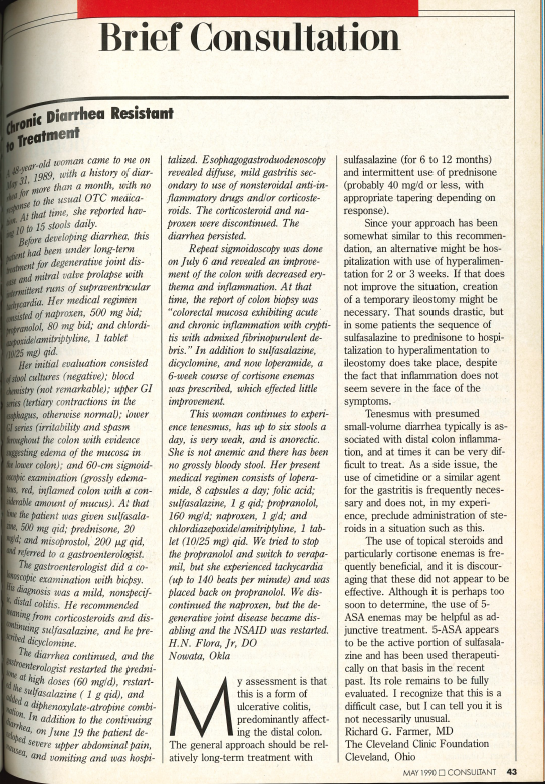
recommendations to Dr HN Flora are still employed today as the primary treatment of inflammatory bowel disease (IBD). A thorough medical history, stool studies, serological markers, and endoscopic tissue biopsies are the mainstay in diagnosing causes of diarrheal illness. Since the 1990s, nonsteroidal options such as biologic agents are now commonly utilized. More recently, polymerase chain reaction (PCR) is now in the forefront of testing, especially when diagnosing infectious causes.
Irritable bowel syndrome (IBS), one of the most common causes of chronic diarrhea, is now a household name. This is in part due to the proliferation of advertisements of its treatment in magazines, mainstream radio, and television. Other causes of chronic diarrhea have also been recognized, such as post-infectious IBS (post-Clostridium difficile colitis) as well as malabsorption syndromes like celiac disease and dumping syndrome from bariatric surgeries.
With the advent of the internet, the average patient with chronic diarrheal disease is now much more informed. Research and exchanges of ideas regarding treatment or which physicians to see are easily done through social media and virtual forums.
As a doctor, my view of diarrheal illness, both acute and chronic, has always been “my patient’s illness,” “someone else’s disease.” That was until my father’s surgical procedure for achalasia. The dumping syndrome that followed is resistant to several treatments. Seeing my father’s daily struggle, I can easily imagine the hardship and frustration Dr Flora’s patient must have experienced. More importantly, I can also feel the social isolation and monumental task of planning each day around one’s eating and bowel habits. I hope that advancements in gene editing, like CRISPR, can offer insights leading to novel treatments and the freedom from such an enslaving condition.
Alan R. Lucerna, DO, FACOI, is the Attending Physician of Emergency Medicine; Assistant Director of Emergency Medicine at Jefferson Health, Stratford; Program Director of Internal Medicine/Emergency Medicine at Rowan University-SOM/Jefferson Health/Our Lady of Lourdes Medical Center; and Associate Program Director of Emergency Medicine Residency at Rowan University-SOM/Jefferson. He has been an active member of Consultant’s Editorial Board since 2017.