


Robotic Surgery Lowers Locoregional Recurrence and Improves Functional Outcomes in Middle and Low Rectal Cancer
Key Highlights
- Robotic surgery reduced 3-year locoregional recurrence rate to 1.6% vs 4.0% with laparoscopic surgery.
- Robotic surgery was associated with improved 3-year disease-free survival (87.2% vs 83.4%).
- Functional outcomes (urinary, sexual, defecation) were better with robotic surgery postoperatively.
- No significant difference in 3-year overall survival between surgical approaches.
In a recent multicenter randomized clinical trial, robotic surgery for middle and low rectal cancer demonstrated superior oncological and functional outcomes compared with conventional laparoscopic surgery. Specifically, robotic surgery was associated with a significantly lower 3-year locoregional recurrence rate and improved disease-free survival, without compromising overall survival. Enhanced functional outcomes were also observed with robotic surgery, particularly regarding urinary, sexual, and defecation functions.
Despite the widespread adoption of robotic surgery for rectal cancer, data supporting its long-term oncological outcomes have been limited. The current study sought to address the existing evidence gap by comparing robotic and laparoscopic surgery in a randomized controlled setting.
The multicenter superiority randomized clinical trial enrolled 1240 eligible patients with middle or low rectal adenocarcinoma without distant metastasis. Conducted across 11 centers in eight Chinese provinces from July 2016 to December 2020, patients were randomized 1:1 to undergo either robotic or conventional laparoscopic rectal cancer resection. The primary outcome was the 3-year locoregional recurrence rate, with secondary outcomes including disease-free survival, overall survival, and functional outcomes (urinary, sexual, and defecation function). Patients were followed through December 31, 2023.
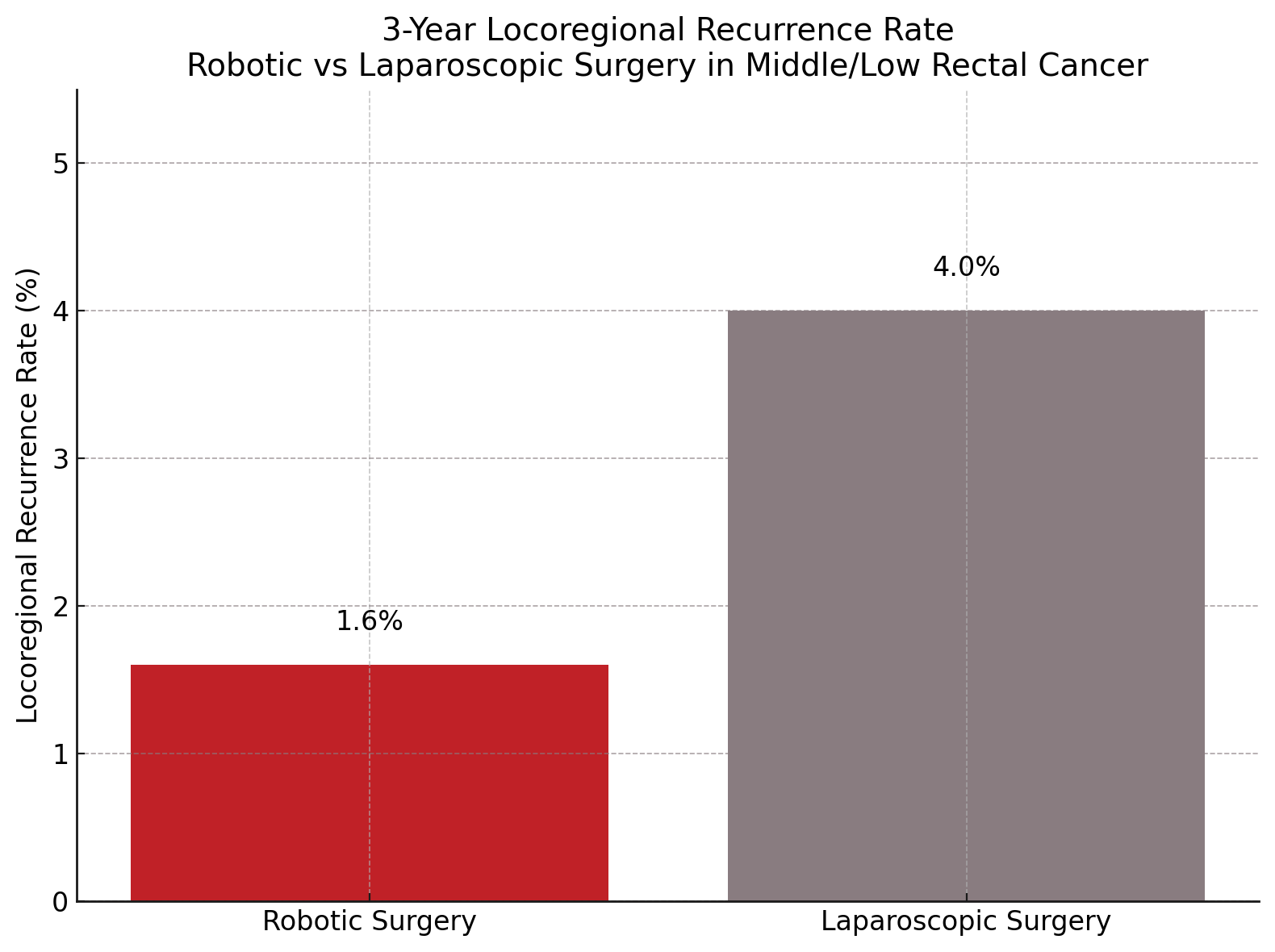
Among the 1171 patients analyzed (586 robotic; 585 laparoscopic), the 3-year locoregional recurrence rate was 1.6% (95% CI, 0.6%-2.6%) in the robotic group compared with 4.0% (95% CI, 2.4%-5.6%) in the laparoscopic group (HR, 0.45; adjusted HR, 0.39; P = .03). The robotic group also showed higher 3-year disease-free survival (87.2%) versus the laparoscopic group (83.4%) (adjusted HR, 0.67; P = .04). Overall survival at 3 years was comparable (94.7% robotic vs 93.0% laparoscopic). Robotic surgery provided superior functional outcomes, with improved urinary, sexual, and defecation function at 3 and 6 months postoperatively, and sustained advantages in urinary and male sexual function at 12 months.
“Compared with conventional laparoscopic surgery, robotic surgery significantly improved long-term oncological outcomes in patients with middle or low rectal cancer,” the study authors concluded. “With additional real-world clinical data and modern, improved training programs for surgeons, robotic surgery could be the preferred choice for patients with middle or low rectal cancer.”
Reference:
Feng Q, Yuan W, Li T, et al. Robotic vs laparoscopic surgery for middle and low rectal cancer: the REAL randomized clinical trial. JAMA. Published online June 2, 2025. doi:10.1001/jama.2025.8123