


Treating Generalized Anxiety Disorders
Anxiety disorders are common, affecting 1 in 3 adults in the United States during their lifetime. However, half of all adults with generalized anxiety disorder go untreated. Treating anxiety disorders is, therefore, an important consideration for primary care providers.
This was the topic of discussion presented at this afternoon’s session at Practical Updates in Primary Care 2021. Speaker Manish Jha, MBBS, is an assistant professor of psychiatry and neuroscience at Icahn School of Medicine at Mount Sinai in New York.
Best Practices
Dr Jha began his session by outlining best practices for treating patients with anxiety. Primary care providers should begin by screening patients using the 7-Item Generalized Anxiety Disorder scale (GAD-7) or the 2-Item scale (GAD-2).
However, to confirm a generalized anxiety disorder diagnosis, additional testing is needed. A GAD score only provides information on the prior 2 weeks, while a diagnosis requires 6 months of excessive anxiety. Additionally, diagnosis requires patients to present with 3 or more of 6 symptoms, such as restlessness, muscle tension, and sleep disturbances.
The next step in diagnosing generalized anxiety disorder is to consider differential diagnoses including medical conditions such as hyperthyroidism and psychiatric disorders such as panic disorder or post-traumatic stress disorder. The likelihood of comorbidities in this patient population is high, so providers should screen for other conditions and mood disorders as well.
Treatment Options
When considering the several treatment options available, Dr Jha encouraged a shared decision-making approach between providers and patients. Treatment options include patient education, active surveillance, pharmacotherapy, psychotherapy, or a combination.
Dr Jha then delved deeply into the use of different pharmacotherapy options, such as serotonin reuptake inhibitors (SRIs), and benzodiazepines.
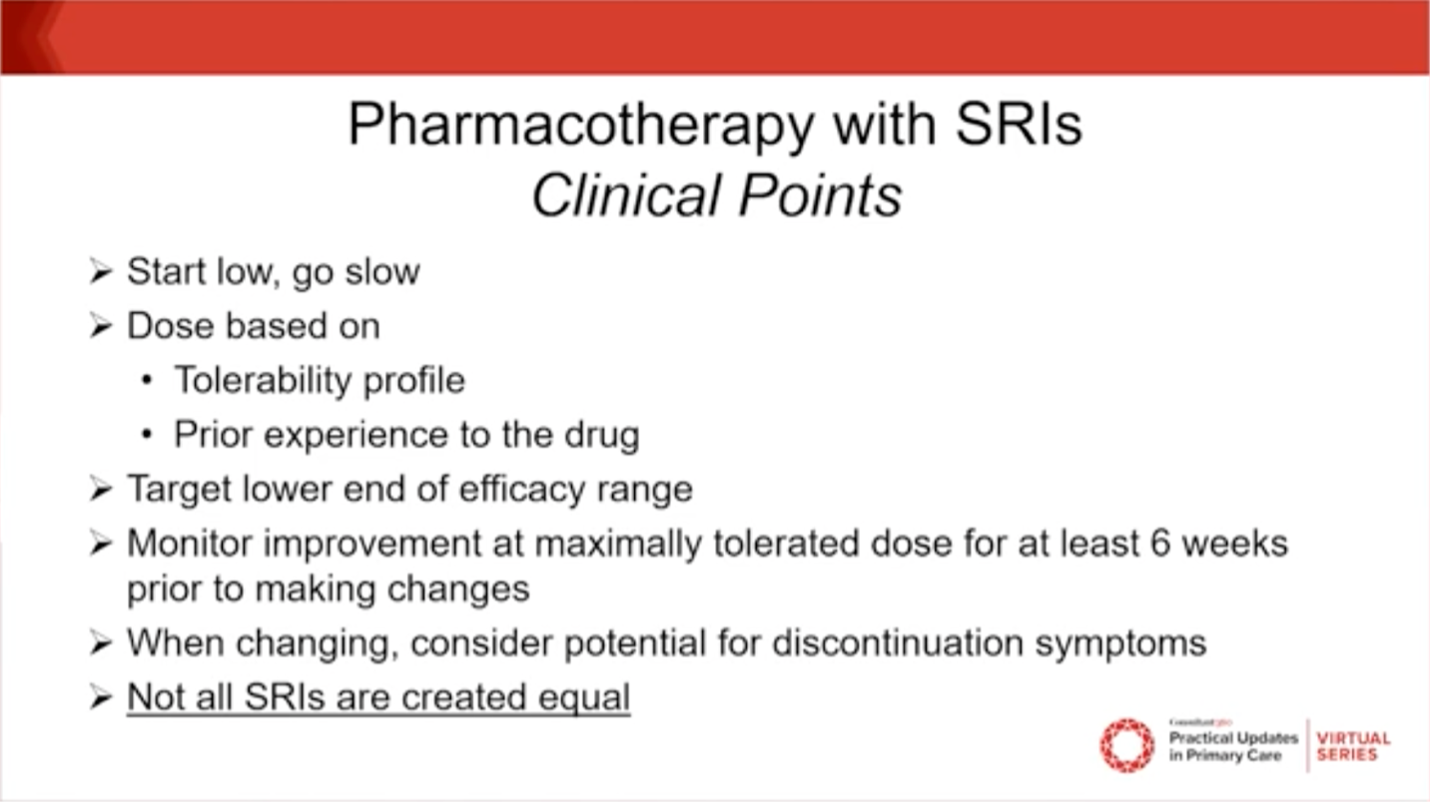
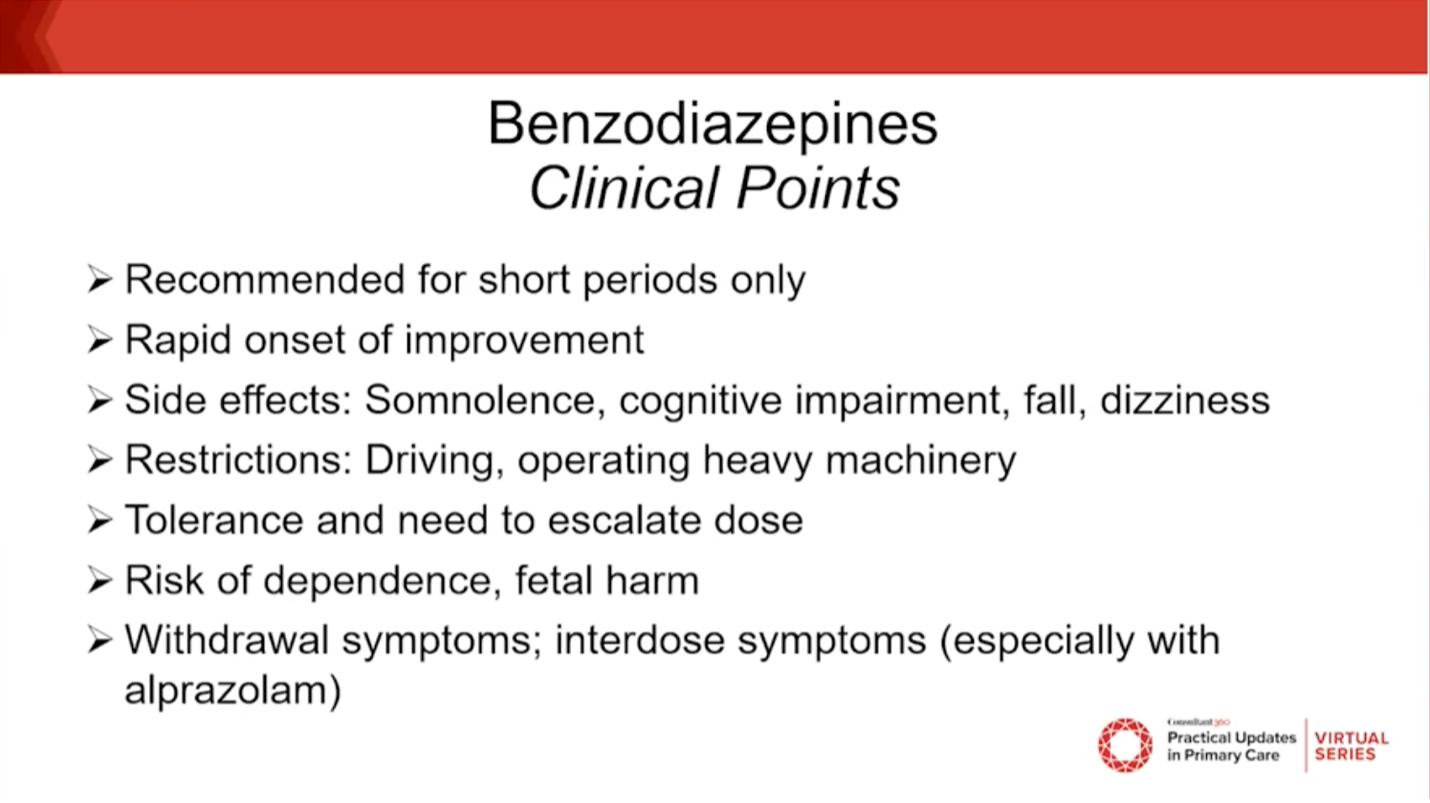
Other medications that providers may consider include buspirone or hydroxyzine. Pregabalin is another option that may be considered but has not been approved by the US Food and Drug Administration for generalized anxiety disorder.
Dr Jha also discussed psychotherapy in depth, with a focus on cognitive behavioral therapy.
The session concluded with Dr Jha providing his personal approach to treatment selection.
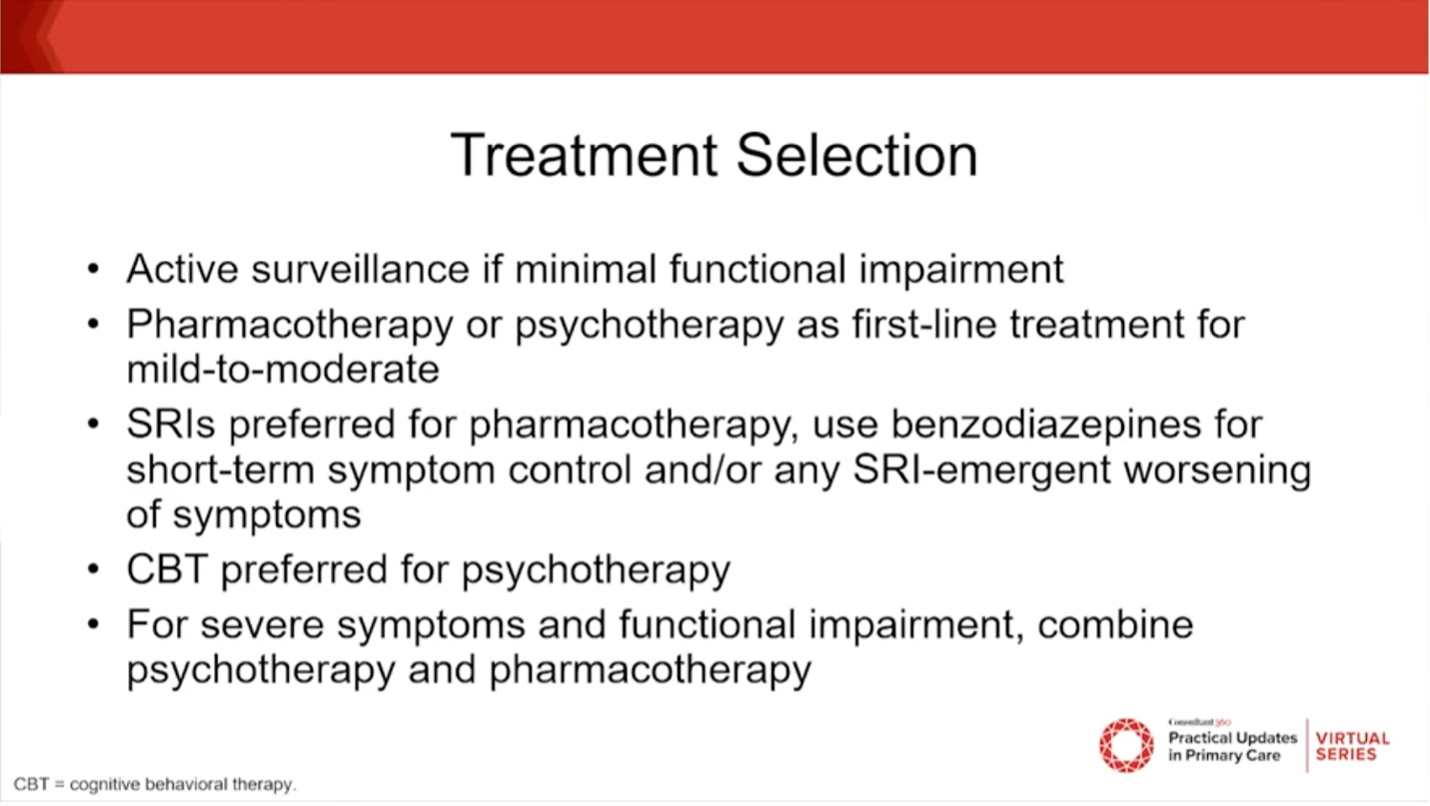
A measurement-based care approach, stepwise decision-making, and consideration of discontinuation symptoms can provide the best patient outcomes, as not only are symptoms considered but also how these symptoms affect patients in their day-to-day life.
“This really helps optimize the treatment and reduces the likelihood of individuals suffering with these disabling conditions at subtherapeutic or ineffective doses of medications,” Dr Jha concluded.
—Leigh Precopio
Reference:
Jha M. Effectively treating anxiety disorders in primary care. Talk presented at: Practical Updates in Primary Care 2021 Virtual Series; May 13-15, 2021; Virtual.