


Improving Vaccination Rates in the Primary Care Clinic
Vaccine hesitancy among parents and guardians continues to be a common issue in the United States. It is increasingly important for primary care providers to understand the reasons for hesitancy and provide knowledgeable clinician recommendations so that their patients are comfortable saying “yes” to vaccines.
This was the topic of discussion during this afternoon’s “Saying Yes to Vaccines” session at Practical Updates in Primary Care 2020.1 The session was led by Shelley Vaughn, DNP, who is an assistant clinical professor at Northern Arizona University and family nurse practitioner at Gila Valley Clinic in Safford, Arizona.
Among the main reasons cited for vaccine hesitancy are missed provider recommendations (22%), safety concerns (22%), lack of necessity (21%), and lack of knowledge (14%).
Shelley began the session by reviewing these main reasons and establishing ways for primary care providers to overcome these vaccination obstacles.
Recommended indications for vaccinations
“We should be knowledgeable to present data to our patients. Our patients want to know what the numbers are,” Shelley said (See Figure 1, click the image to enlarge).
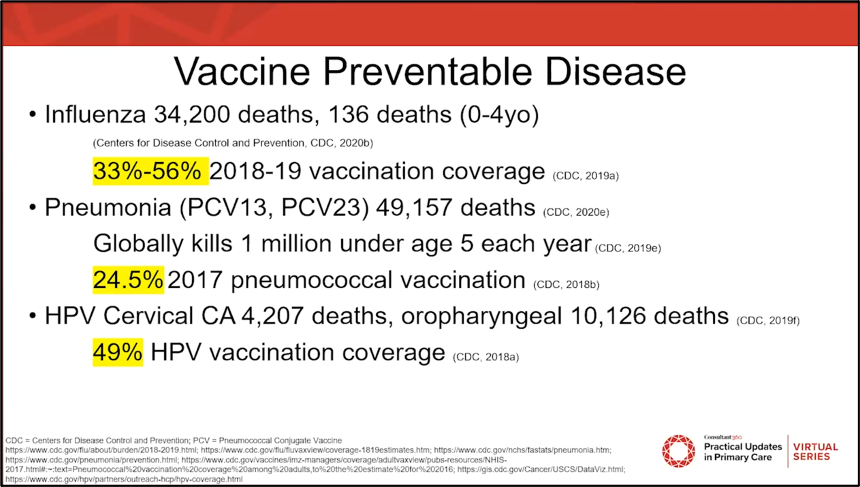
“If we’re able to discuss this with our patients, they’re more likely to go ahead and say, ‘Yes, I know that I need to do this vaccine to protect any children in my family under age 2, and any older adults in my family that are older than age 65, or if there’s someone that’s immunocompromised,’” Vaughn said of helping her patients understand the vaccine effectiveness rates.
An important point for patients to understand is when an individual is vaccinated and later becomes infected, there is less viral shedding, and therefore a smaller likelihood of transmission.
Implement Clinician Recommendations
Discussing safety concerns and, therefore, debunking myths are among the most important practices for clinicians in reducing vaccine hesitancy.
Shelley emphasizes the use of references and citations to easily provide information and data on vaccine safety. She included a supplemental source for answering some common vaccination questions to use as a guide.2
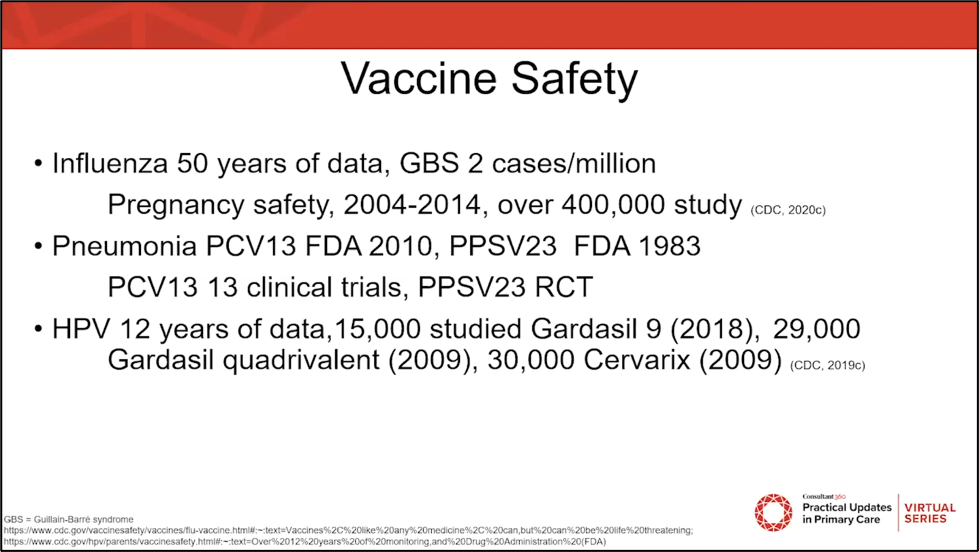
Figure 2 highlights relevant safety data on influenza, pneumonia, and human papillomavirus (HPV) vaccine clinical trials (click the image to enlarge).
In addition to discussing common myths and safety, there are several practices that do not have sufficient evidence to support continuing their use, such as paper records, clinic or community-wide education when used alone, and monetary sanction policies. Using electronic health records and supporting vaccination through a collaborative process including the entire health care team of clinicians, their front desk workers, the public health department, and even their families can help to improve vaccination rates.
Takeaway Messages
She concluded the session with reminding health care providers that there are numerous clinical pearls that can all make a difference in improving vaccination rates.
“Remember, those parents that are hesitant to get their child vaccinated is not because they are not a good parent or they’re not wanting to do the right thing. It’s actually the opposite … They are wanting to keep their child safe. And we understand that. And we respect that. And we want to make sure we sit down, and they feel comfortable, and they understand that we respect their review of the literature, and have that discussion with them,” Shelley said.
—Leigh Precopio
References:
- Vaughn S. Saying yes to vaccines. Talk presented at: Practical Updates in Primary Care 2020 Virtual Series; December 4-5, 2020; Virtual.
- Influenza (flu) vaccines. Centers for Disease Control and Prevention. Reviewed September 25, 2020. Accessed December 4, 2020. https://www.cdc.gov/vaccinesafety/vaccines/flu-vaccine.html