


Alzheimer Disease and Dementia: Early Detection and Collaborative Care
Diagnosing mild cognitive impairment early is critical for reducing the burden of Alzheimer disease (AD), and primary care providers are often the entry point for patients presenting with cognitive symptoms.
This was the topic of discussion during this afternoon’s session presented by Carolyn K. Clevenger, DNP, GNP-BC, who is the clinical director of the Integrated Memory Care Clinic at Emory Healthcare in Atlanta, Georgia, and David S. Geldmacher, MD, who is the Warren Family Endowed Chair in Neurology and director of the Division of Memory Disorders and Behavioral Neurology at the University of Alabama at Birmingham.
The session started with Dr Clevenger describing a patient case that illustrated the importance of engaging with the health care system.
“The role of primary care is so critical in our health care system,” Dr Clevenger said. “If you think about health care as a house, primary care is the front door.”
Early Recognition and Diagnosis
“The vast majority of Alzheimer disease diagnoses (85%) are made in primary care,” Dr Clevenger said. She explained that the signs and symptoms could present as cognitive, behavioral, or functional symptoms and may be brought up by the patient, an informal informant or observer (such as a spouse or an adult child), a formal or official relation (such as a law enforcement official), or a clinician or clinical staff.
A survey conducted in Georgia showed that many respondents reported cognitive symptoms, but a majority had not discussed their symptoms with their primary care provider. A delay in dementia diagnosis could impact patients’ brain and livelihood, Dr Clevenger said.
She continued by discussing the biomarkers associated with cognitive impairment. Changes in biomarkers such as soluble amyloid and Tau tangles can often be seen during cognitively normal stages. These levels will then increase during the mild cognitive impairment stage, and then plateau at the maximum level during the dementia stage, she said.
“As amyloid is increasing during the cognitively normal stage, there’s an opportunity to make a difference, because the cognitive symptoms are delayed,” she said.
She also explained the diagnosis process via Figure 1 below and listed the most common cognitive tests in primary care as the Alzheimer Questionnaire and the Ascertain Dementia 8-Item for the informant, as well as the Memory Impairment Screen and Montreal Cognitive Assessment for the patient.
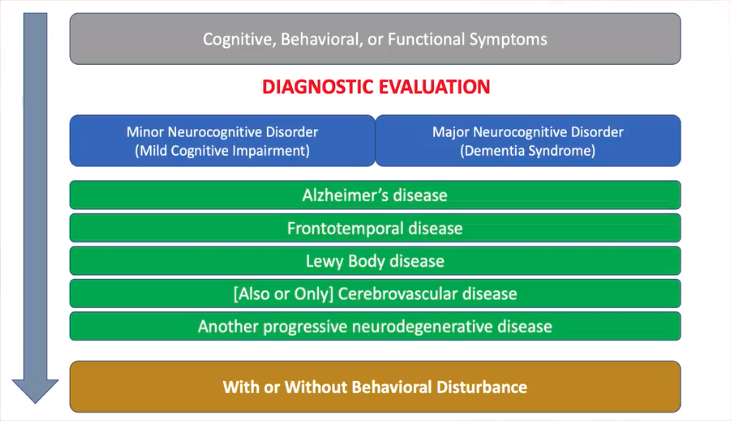
Figure 1.
Treatment Options
From there, she handed the presentation over to Dr Geldmacher, who discussed current and future treatment options.
He started by explaining that the mainstay of AD treatment are cholinesterase inhibitors. Donepezil, galantamine, and rivastigmine are currently approved for treating mild to moderate AD.
“In the community setting, about 14% of patients on cholinesterase inhibitors report adverse effects over the first 9 months of treatment,” Dr Geldmacher said.
Although adverse events related to cholinesterase inhibitors are not common, gastrointestinal adverse events including nausea, vomiting, and diarrhea are the most frequently reported. These events are most likely to occur during initiation of treatment or dose titration and are associated with high doses and quick titration.
“Memantine is our other agent. It follows a different mechanism of action—NMDA receptor antagonist—and it was approved for moderate and severe Alzheimer disease,” Dr Geldmacher said. Memantine is frequently used in combination with donepezil, which has shown benefits after 6 months of use compared with donepezil alone.
Nonpharmacologic approaches for minimizing behavioral symptoms related to dementia include optimizing sleep hygiene, minimizing drug use, reducing purposeless activities such as pacing, and using schedules for toileting.
Aducanumab is currently in review by the US Food and Drug Administration for the treatment of early AD. It is a monoclonal antibody that selectively targets Aβ aggregates. In a phase 2 study, the drug was shown to be highly effective at reducing amyloid on PET scan, especially at high doses (10 mg/kg-1).
“The best dementia care is a team effort, and it’s a collaboration across members of the health care team, family, and community. Primary care, as Carolyn mentioned, is the core element of this team,” Dr Geldmacher concluded.
—Amanda Balbi
Reference:
Clevenger C, Geldmacher D. Alzheimer’s disease: the importance of early detection and collaborative care. Talk presented at: Practical Updates in Primary Care 2020 Virtual Series; October 9-10, 2020; virtual.