


COVID-19 Disease Burden Remained Substantial in the United States From 2022 to 2024, With Disproportionate Impact on Older Adults
Key Highlights:
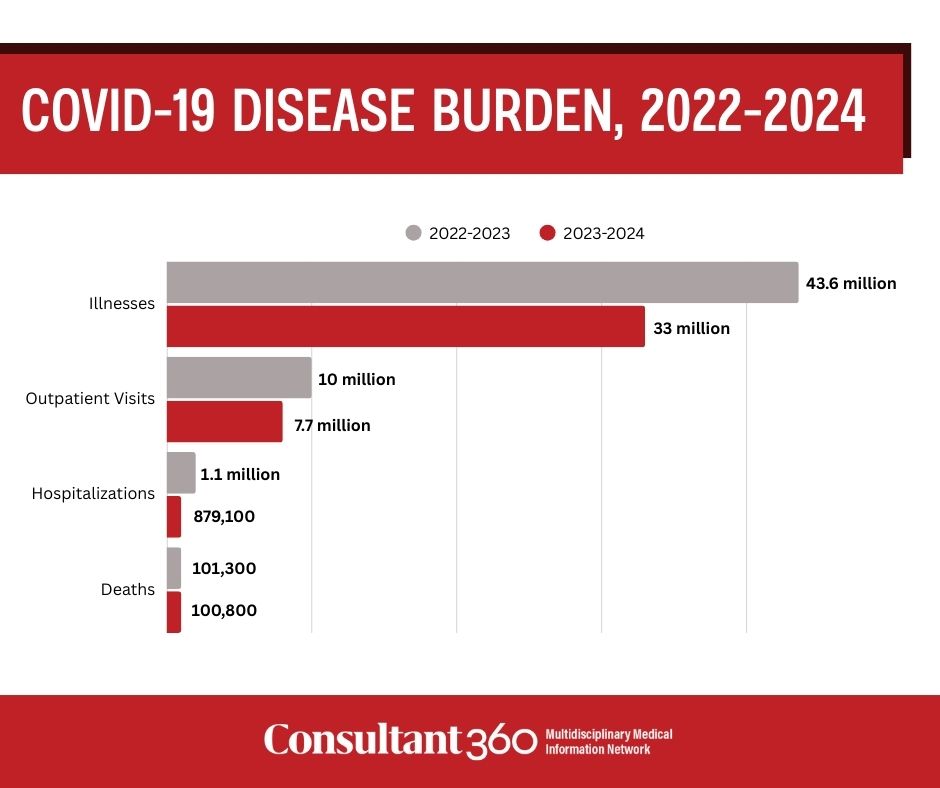
- An estimated 43.6 million COVID-19–associated illnesses occurred in the United States in 2022–2023, declining to 33.0 million in 2023–2024.
- Annual COVID-19–associated deaths remained near 100,000 in both surveillance periods.
- Adults aged 65 years and older accounted for the majority of hospitalizations and deaths despite representing less than one-fifth of the population.
- Overall COVID-19 burden declined compared with earlier pandemic years but remained clinically significant nationwide.
Despite the end of the federal public health emergency, COVID-19 continued to impose a major health burden in the United States through 2024, according to a large modeling study published in JAMA Internal Medicine. Investigators reported millions of illnesses annually and persistent mortality, with older adults disproportionately affected across all outcomes
The study provides updated national estimates of COVID-19–associated illnesses, outpatient visits, hospitalizations, and deaths, addressing gaps created by evolving testing practices, surveillance changes, and underdetection.
Researchers conducted a cross-sectional analysis using hospitalization data from the COVID-19 Hospitalization Surveillance Network (COVID-NET), which covers approximately 10% of the US population across 12 states. Hierarchical Bayesian models were applied to adjust for underdetection related to testing practices and test sensitivity.
Probabilistic multiplier models were then used to estimate national counts of outpatient visits, symptomatic illnesses, and deaths for two surveillance periods: October 2022 to September 2023 and October 2023 to September 2024. Estimates were stratified by age group and reported with 95% uncertainty intervals.
Study Findings
During the 2022–2023 period, investigators estimated 43.6 million COVID-19–associated illnesses, 10.0 million outpatient visits, 1.1 million hospitalizations, and 101,300 deaths in the United States. In 2023–2024, estimates declined to 33.0 million illnesses, 7.7 million outpatient visits, 879,100 hospitalizations, and 100,800 deaths.
Adults aged 65 years and older experienced a disproportionate share of severe outcomes. In 2023–2024, this age group accounted for approximately 68% of hospitalizations and more than 80% of deaths, despite representing 17.7% of the US population. Hospitalization rates consistently peaked among older adults during winter months.
Clinical Implications
The findings highlight that COVID-19 remained a major cause of morbidity and mortality in the United States through 2024, particularly among older adults. The authors noted that waning immunity and year-round viral circulation continue to pose risks for severe disease.
The study also acknowledged limitations, including assumptions that COVID-NET catchment areas were representative of the national population and reliance on testing adjustments from prior surveillance periods. Nonetheless, sensitivity analyses suggested that these factors did not substantially alter overall estimates.
Expert Commentary
“COVID-19 continues to disproportionately affect people 65 years and older whose immunity may wane faster than younger adults and who account for most hospitalizations and deaths,” the researchers concluded.
Reference:
Koumans EHA, Khan D, Trejo I, et al; Estimate of Burden of COVID-19 Workgroup. Estimated burden of COVID-19 illnesses, medical visits, hospitalizations, and deaths in the US from October 2022 to September 2024. JAMA Intern Med. Published online January 5, 2026. doi:10.1001/jamainternmed.2025.7179