


This gives clinicians another imaging tool when conventional scans (e.g., FDG-PET/CT) are limited by ILC’s biology and metastatic pattern.
April
2024
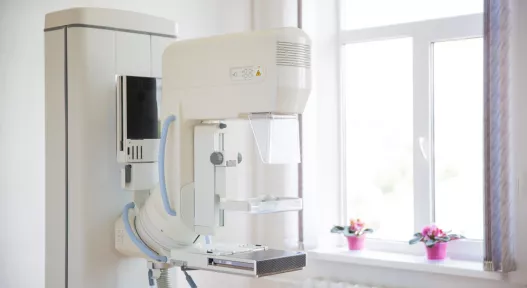
The U.S. Preventative Services Task Force issued a recommendation to begin biennial mamography at age 40 through 74 after finding insufficient evidence to support routine screening for those aged 75 years and older.
April
2025

The National Comprehensive Cancer Network (NCCN) issued a flash update adjusting the regimen selection/sequence, febrile-neutropenia risk, and supportive care details.
May
2025

The NCCN added a recommendation to consider FES-PET for systemic staging in certain patients with recurrent or metastatic invasive lobular carcinoma (ILC).
June
2025

The American Society of Clinical Oncology published updated guidelines on sentinel lymph node biopsy (SLNB) in early-stage breast cancer.
This update incorporated data from several randomized trials conducted since 2017, and clarifies circumstanced in which SLNB may be omitted, including carefully selected T1 tumors treated with breast-conserving therapy, favorable biology, and negative imaging.
November
2025

The NCCN released Version 5.2025 of its Breast Cancer guidelines, which expanded recommendations on workup, locoregional therapy, surveillance, and systemic neoadjuvant/adjuvant therapy for invasive, nonmetastatic breast cancer.
These updates reflect evolving evidence supporting less extensive surgery and optimized regional control strategies.
January
2026

The NCCN updated its Breast Cancer Guidelines (Version 2.2026) to expand criteria for omission of SLNB in carefully selected patients with early-stage, hormone receptor–positive/HER2-negative disease.
Incorporating evidence from the SOUND and INSEMA trials, the NCCN now states that SLNB may be omitted in postmenopausal patients aged >50 years with cT1N0 (node negative by axillary ultrasound), HR-positive/HER2-negative, grade 1–2 tumors who are willing to receive whole-breast radiation therapy and endocrine therapy, with caution advised in those with lobular histology.
The NCCN also included updates to Version 1.2026 within its Breast Cancer Guidelines (Version 2.2026) to add sacituzumab govitecan-hziy (with pembrolizumab for PD-L1 CPS ≥10 disease) as a preferred first-line therapy option for metastatic triple-negative breast cancer.
Reference:
National Comprehensive Cancer Network. NCCN Clinical Practice Guidelines in Oncology: Breast Cancer. Version 2.2026. Published February 27, 2026. Accessed March 4, 2026.