


Antimigraine Medication Use Before Pregnancy and in the First Trimester: Evidence From a Danish Cross-Sectional Study
Key Highlights:
- Nearly 4 in 5 women with migraine used antimigraine medication before pregnancy, declining to about 1 in 5 during the first trimester.
- Paracetamol was the most commonly reported medication both before pregnancy and in early pregnancy.
- Frequent use of antimigraine medication dropped from 17.5% before pregnancy to 5% in the first trimester.
- Short education, chronic somatic disease, and mental illness were associated with continued or frequent use in early pregnancy.
Most women with migraine reported use of antimigraine medication in the 3 months before pregnancy, while use decreased substantially during the first trimester, according to findings published in Headache: The Journal of Head and Face Pain. The cross-sectional study provides patient-reported data on both the prevalence and frequency of medication use, as well as maternal characteristics associated with continued treatment in early pregnancy.
Investigators analyzed data from the Copenhagen Pregnancy Cohort collected between October 2013 and May 2019. All women who completed an electronic first-trimester questionnaire and were categorized as having migraine, based on self-report or use of triptans, were included. Medication use in the 3 months before pregnancy and during the first trimester was self-reported, including the type and frequency of use. Frequent use was defined as daily or once to twice per week. Logistic regression analyses were used to assess associations between maternal characteristics and medication use in the first trimester.
Study Findings
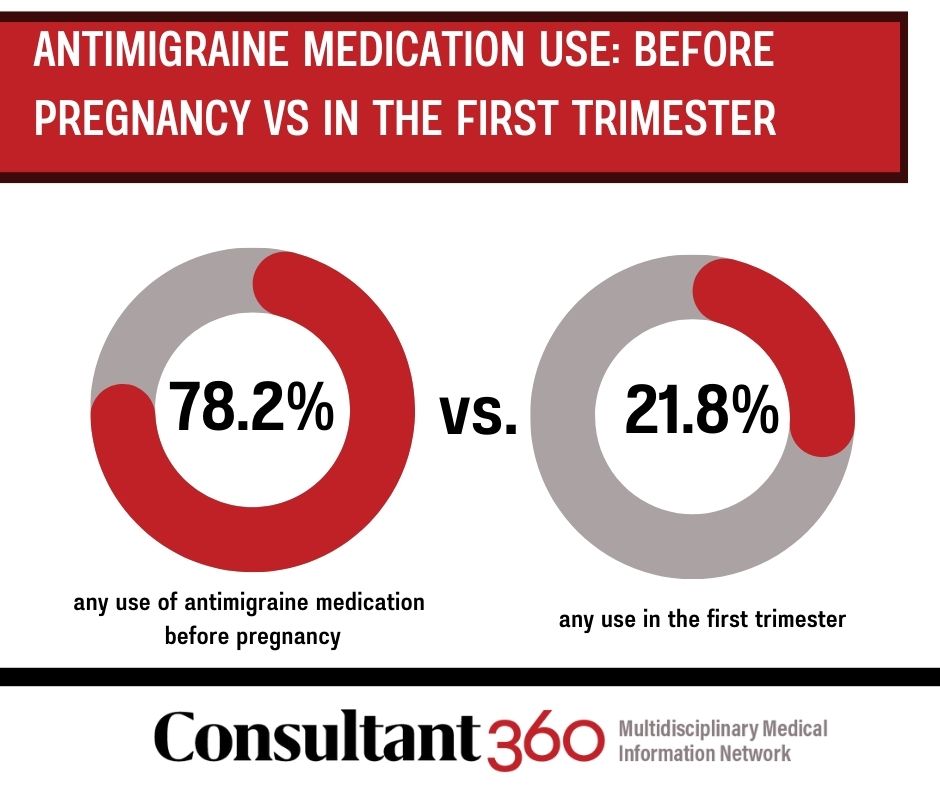
Among 1,586 women with migraine, 78.2% reported any use of antimigraine medication before pregnancy, compared with 21.8% in the first trimester. Non-narcotic analgesics were the most frequently used drug class in both periods. Before pregnancy, paracetamol was reported by 50% of women, followed by ibuprofen (26.3%) and sumatriptan (12%). In the first trimester, paracetamol use declined to 17.1%, sumatriptan to 3.1%, and ibuprofen to 0.7%.
Frequent use of antimigraine medication was reported by 17.5% of women before pregnancy and 5% during the first trimester. Paracetamol accounted for the most frequent use in early pregnancy. Short education duration, presence of other chronic somatic diseases, and mental illness were each associated with higher odds of frequent antimigraine medication use in the first trimester after adjustment for age and parity.
Clinical Implications
According to the study authors, the findings suggest that most women with migraine substantially reduce antimigraine medication use in early pregnancy, though a subset continues treatment, particularly those with additional health or psychosocial factors. The authors note that awareness of these characteristics may help clinicians identify patients who require targeted counseling and support regarding migraine management during pregnancy.
Expert Commentary
“By offering an overview of patient-reported use of specific antimigraine medication before and during early pregnancy, this study contributes important knowledge to the field. Clinicians should actively address women's medication use and self-initiated changes and ensure optimal information about treatment options and necessary adjustments before and during pregnancy,” the researchers concluded.
Reference
Wieland S, Emborg MS, de Wolff MG, et al. Use of antimigraine medication before pregnancy and in the first trimester: A cross-sectional study. Headache. 2025;65:1704-1715. doi:10.1111/head.15010