


Adding Continuous Glucose Monitoring to GLP-1 Therapy Significantly Enhances HbA1c Reduction in Type 2 Diabetes
Key Highlights
- Adding CGM to GLP-1 therapy led to significantly greater reductions in HbA1c compared to GLP-1 therapy alone.
- GLP-1 use alone improved glycemic control with a notable increase in the percentage of patients achieving HbA1c < 7.0%.
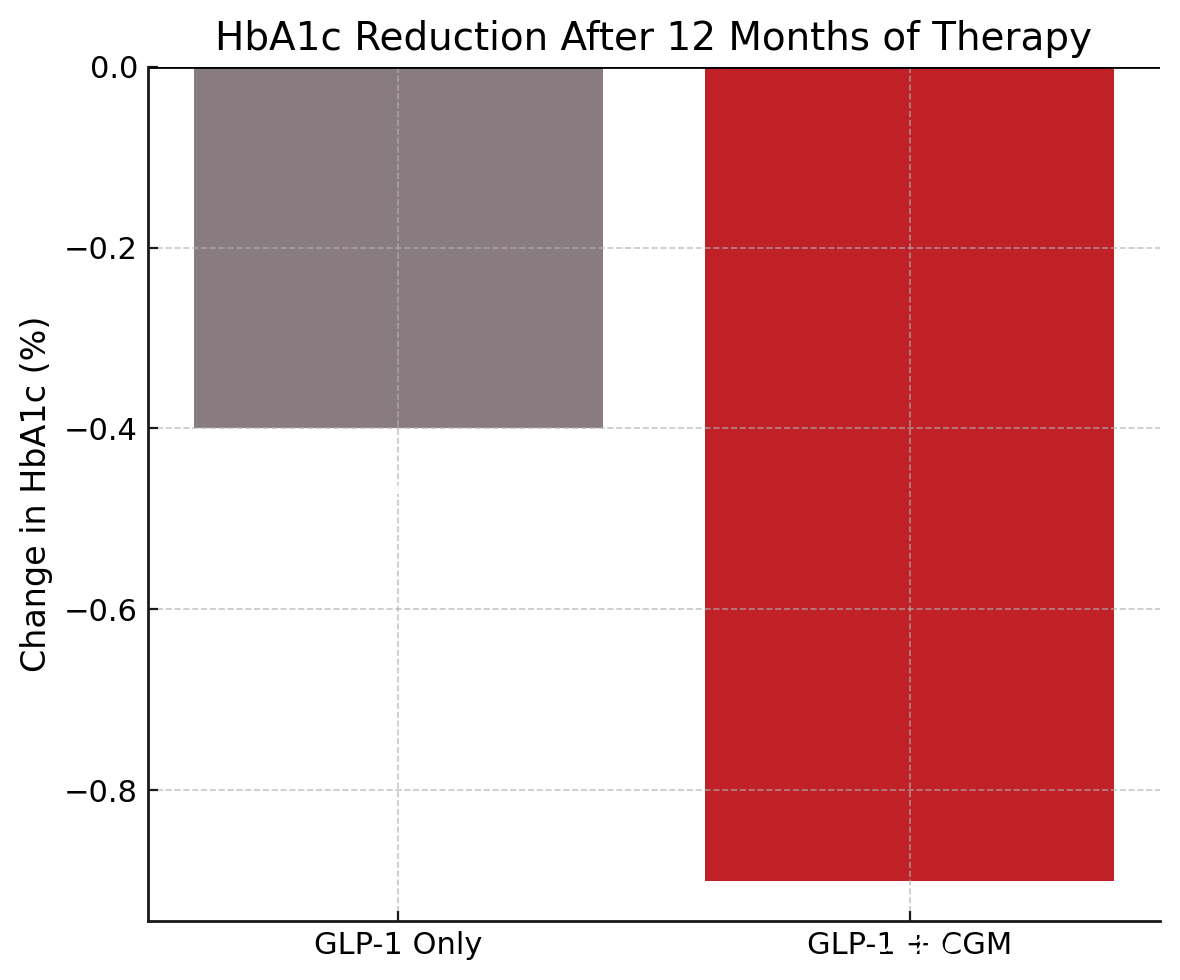
- The combined GLP-1+CGM group experienced a 0.5% greater reduction in HbA1c than the GLP-1 only group over 12 months.
In a retrospective cohort study analyzing real-world data, the combination of continuous glucose monitoring (CGM) with GLP-1 receptor agonist therapy led to significantly improved glycemic outcomes in people with type 2 diabetes (T2D) compared with GLP-1 therapy alone. Patients who used CGM in conjunction with GLP-1 showed a larger reduction in HbA1c over 12 months than those on GLP-1 alone, with a difference-in-difference of 0.5% (P = .001). This research was presented at the American Diabetes Association 85th Scientific Sessions.
While GLP-1 therapies are well-established for improving glycemic control in people with T2D, the incremental value of integrating CGM has not been widely studied. This investigation addresses a key clinical question: can real-time glucose data enhance the efficacy of pharmacologic intervention in diabetes management?
The researchers performed a retrospective analysis using electronic medical records from three clinical centers. Eligible patients were adults with at least four documented HbA1c measurements—12 and 6 months before, and 6 and 12 months after, GLP-1 initiation. Among 4110 GLP-1 users, 349 also initiated CGM within ±2 months of GLP-1 start. A 1:3 propensity match was used to compare these users with 3,761 GLP-1 only users. Statistical analyses included paired t-tests and McNemar tests.
Overall, GLP-1 therapy alone resulted in significant improvements in glycemic control, with mean HbA1c decreasing from 7.7% to 7.1% (P < .001). The proportion of patients achieving HbA1c < 7.0% rose from 35% to 51%, while those with HbA1c > 9.0% dropped from 14% to 6% (both P < .001). When CGM was added, the mean HbA1c after 12 months was further reduced (7.2% vs 7.4%, P = .03), with a greater overall decline in HbA1c from baseline (-0.9 vs -0.4).
“GLP-1 is associated with improved HbA1c outcomes in PwT2D; adding CGM further lowered HbA1c,” the study authors concluded.
Reference:
Thapa S, Vora D, Rioles N, et al. HbA1c improvement with the addition of continuous glucose monitoring to GLP-1 agonist therapy in people with type 2 diabetes. Presented at: American Diabetes Association; June 20-23, 2025; Chicago, IL. https://professional.diabetes.org/scientific-sessions