


Helping Patients Receive Improved Care
Lisa Samalonis, Managing Editor
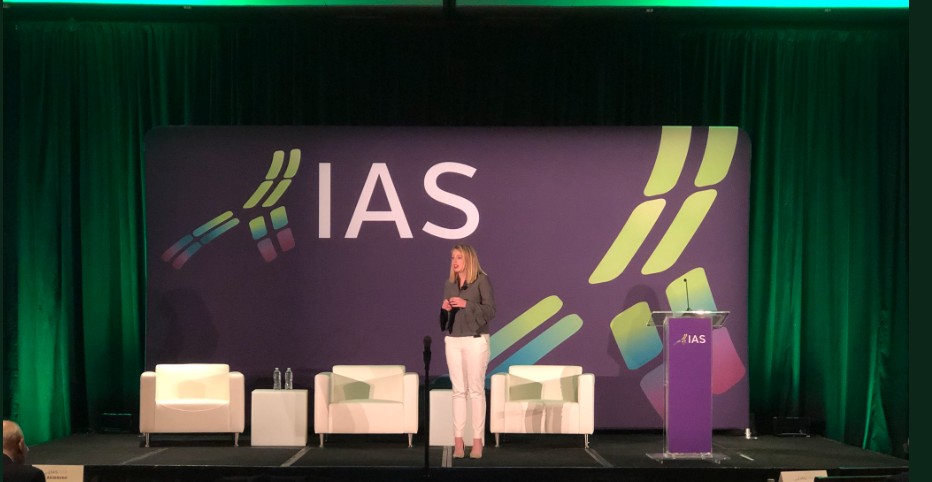 Figure 1. Lilly Stairs, head of patient advocacy at Clara Health and board member of the American Autoimmune Related Diseases Association, presents the keynote at the Interdisciplinary Autoimmune Summit.
Lilly Stairs, head of patient advocacy at Clara Health, and a board member of the American Autoimmune Related Diseases Association, presented the keynote talk at IAS 2018, “Patient Perspective: Living Life with Multiple Immune-Mediated Inflammatory Diseases.”
She briefly shared her story of being diagnosed with 3 autoimmune disorders by the age of 19. Today, in her position Ms Stairs works with patients to improve engagement and ensuring the patient voice is heard. Her talk provided feedback from patients and offered tips for clinicians from the patients’ perspectives on dealing with the health care system.
“I am here to illuminate patient burdens you may be unaware of and offer tangible solutions and resources to help you better support your patients and help you understand the patient perspective as it relates to shared decision making,” she said.
Identifying Solutions
She suggested the clinicians ask patients if there is an administrative burden they are frustrated by when trying to navigate the health care system. “They might not know to ask you and it might be something you can easily help with,” she said.
Key patient frustrations are often centered around the difficulty of physicians coordinating care with specialists outside hospital/practice as well as other administrative burdens on the patient. Another concern is the lack of resources and/or direction to resources.
Ms Stairs acknowledged that physicians are also managing administrative burdens and are often pressed for time. “Physicians typically have 10 minutes or less to see their patients, and often their schedules are double or triple booked,” she said. “In addition, technology has gotten better but has a long way to go.”
She provided resources beyond advocacy groups for clinicians to share with their patients. They ranged from cost saving programs and websites for medicines to support groups, social media, and other information available on line. She also recommended clinicians ask their patients: Is there a resource you have found to be particularly helpful in your journey?
To improve the coordination of care, she recommended selecting one specialist to “own” the patient case who will help coordinate appointments for the same day when possible. Combined care clinics (eg, dermatology/rheumatology) are also extremely helpful to the patient, she said. Giving patient access to a direct line of communication, such as a cell phone of the physician or nurse, also can ease the patient’s concerns.
“Continuing to ask every patient: ‘Where are there currently communication gaps? How can we better coordinate care across your team?’ is very helpful,” Ms Stairs said.
Shared Decision Making
“Most autoimmune patients see 5 doctors over 4.6 years before a correct diagnosis. They have likely had to do a “boat load” of their own research and may harbor a mistrust of the health care system. They also may be more empowered than your average patient,” she said.
Share decision making has been a buzz word in the health care field in recent year. Ms Stairs offered some suggestions to help develop a genuine shared decision making process:
- Ask patients what their goals are for their health; what does “success” look like to them?
- Keep conversations open; try not to immediately shut any of their comments
- When possible, provide multiple paths forward for the patient to choose from
- Incorporate empowering language (eg, “It’s ultimately your decision”; “It is your body, your life, your choice”)
- Let them know it’s okay to take time to think about it, do research, seek a second opinion.