


HHS, Department of Agriculture Unveil New Dietary Guidelines, Food Pyramid
Key Highlights
- HHS and the Department of Agriculture unveiled new dietary guidelines and an updated food pyramid for Americans.
- According to HHS, the changes mark a shift toward prioritizing health outcomes rather than health equity.
- The American Heart Association warns that the emphasis on red meat and whole-fat dairy may be detrimental to cardiovascular health.
On Jan. 7, 2025, the U.S. Department of Health and Human Services (HHS) Secretary Robert F. Kennedy, Jr., alongside U.S. Department of Agriculture Secretary Brooke Rollins announced new dietary guidelines and an updated food pyramid for Americans.1
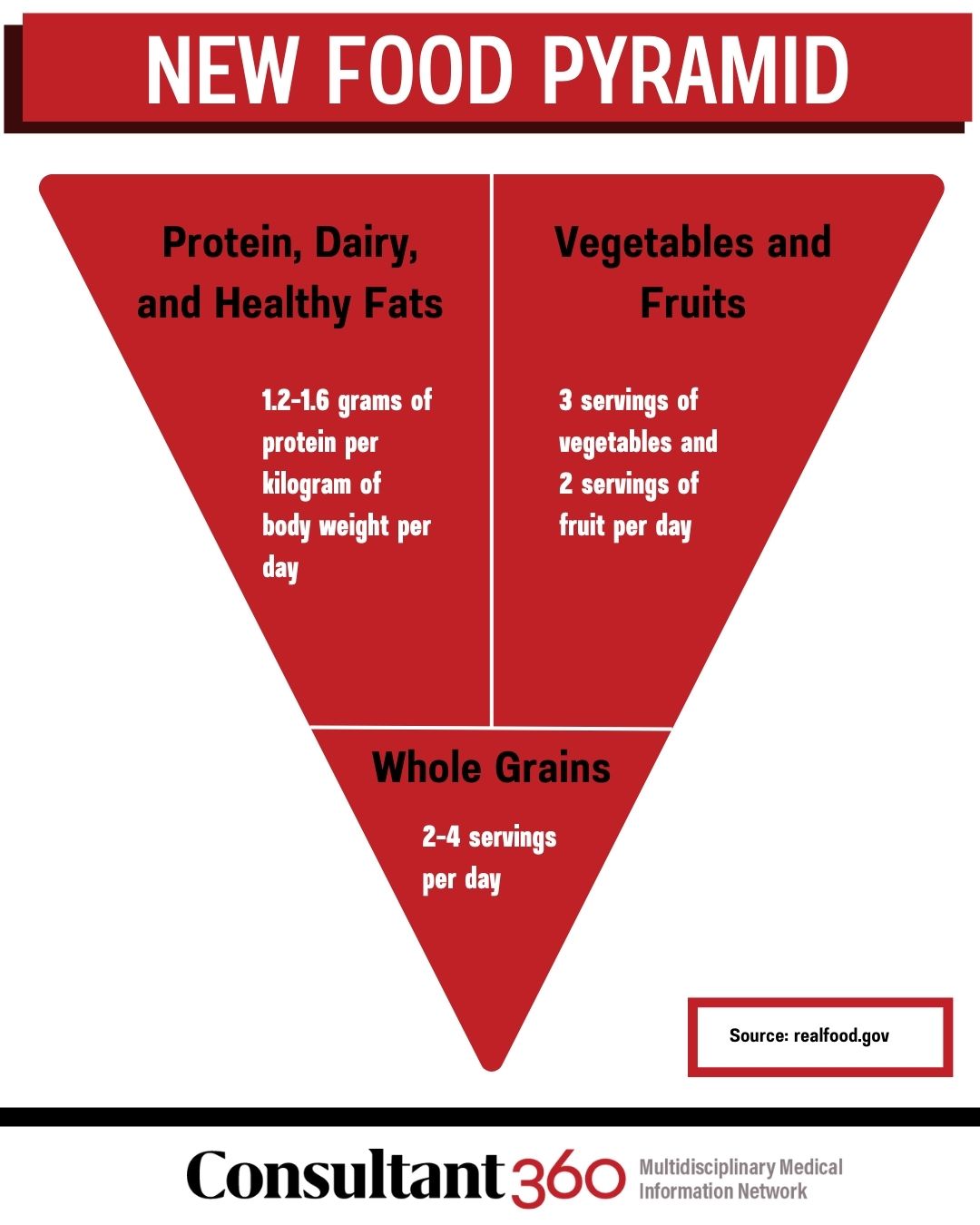
These guidelines include a shift toward prioritizing protein in every meal, raising the daily protein target to 1.2-1.6 grams per kilogram of body weight per day, as well as avoiding highly processed foods and added sugars.1-3 The new guidance also prioritizes full-fat dairy and “ending the war on healthy fats,” according to an HHS fact sheet.2 The new pyramid recommends 3 servings of vegetables and 2 servings of fruit per day, as well as 2-4 fiber-rich whole grains.2,3
“At long last, we are realigning our food system to support American farmers, ranchers, and companies that grow and produce real food,” Secretary Rollins said in an HHS press release. “Farmers and ranchers are at the forefront of the solution, and that means more protein, dairy, vegetables, fruits, healthy fats, and whole grains on American dinner tables.”1
Shifting Priorities
According to HHS, the new dietary guidelines mark a shift away from the central goal of “health equity” that was at the forefront of the Biden administration. The current administration argues that moving to prioritizing health outcomes will result in reduced healthcare costs.2,3
Medical Organizations React
The American Medical Association (AMA) released a statement applauding the new guidelines.
“The Guidelines affirm that food is medicine and offer clear direction patients and physicians can use to improve health,” Bobby Mukkamala, MD, President of the AMA said in a press release.4
The American Heart Association also released a statement, which praised the limits on processed foods and added sugars, while cautioning about unintended consequences.
“We are concerned that recommendations regarding salt seasoning and red meat consumption could inadvertently lead consumers to exceed recommended limits for sodium and saturated fats, which are primary drivers of cardiovascular disease,” the AHA said in a press release. “While the guidelines highlight whole-fat dairy, the Heart Association encourages consumption of low-fat and fat-free dairy products, which can be beneficial to heart health.”5
References
- Kennedy, Rollins Unveil Historic Reset of U.S. Nutrition Policy, Put Real Food Back at Center of Health. https://www.hhs.gov/press-room/historic-reset-federal-nutrition-policy.html. Published Jan. 7, 2026. Accessed Jan. 7, 2026.
- Fact Sheet: Trump Administration Resets U.S. Nutrition Policy, Puts Real Food Back at the Center of Health. https://www.hhs.gov/press-room/fact-sheet-historic-reset-federal-nutrition-policy.html. Published Jan. 7, 2026. Accessed Jan. 7, 2026.
- Real Food Starts Here. https://realfood.gov/. Accessed Jan. 7, 2026.
- AMA applauds Dietary Guidelines, announces commitments on nutrition. https://www.ama-assn.org/press-center/ama-press-releases/ama-applauds-dietary-guidelines-announces-commitments-nutrition. Published Jan. 7, 2026. Accessed Jan. 7, 2026.
- New dietary guidelines underscore importance of healthy eating. https://newsroom.heart.org/news/releases-20260107-6915862. Published Jan. 7, 2026. Accessed Jan. 7, 2026.