



Peer Reviewed
Facial Flat Warts

Author:
Joe R. Monroe, MPAS, PA
Epiphany Dermatology, Tulsa, Oklahoma
Citation:
Monroe JR. Facial flat warts [published online February 11, 2019]. Consultant360.
A 15-year-old girl was referred to a dermatology practice for evaluation and treatment of lesions that had been present on both sides of her face for more than a year and had been unresponsive to topical acne treatment with adapalene. The lesions caused no discomfort but were cosmetically unacceptable. Aside from being allergy-prone, the patient was otherwise healthy.
Physical examination. Sparsely scattered, planar, smooth papules measuring 2 to 3 mm could be seen best with oblique light on both sides of the face, with a total of about 10 such lesions, all quite consistent with verrucae planae, also known as flat warts (Figure).
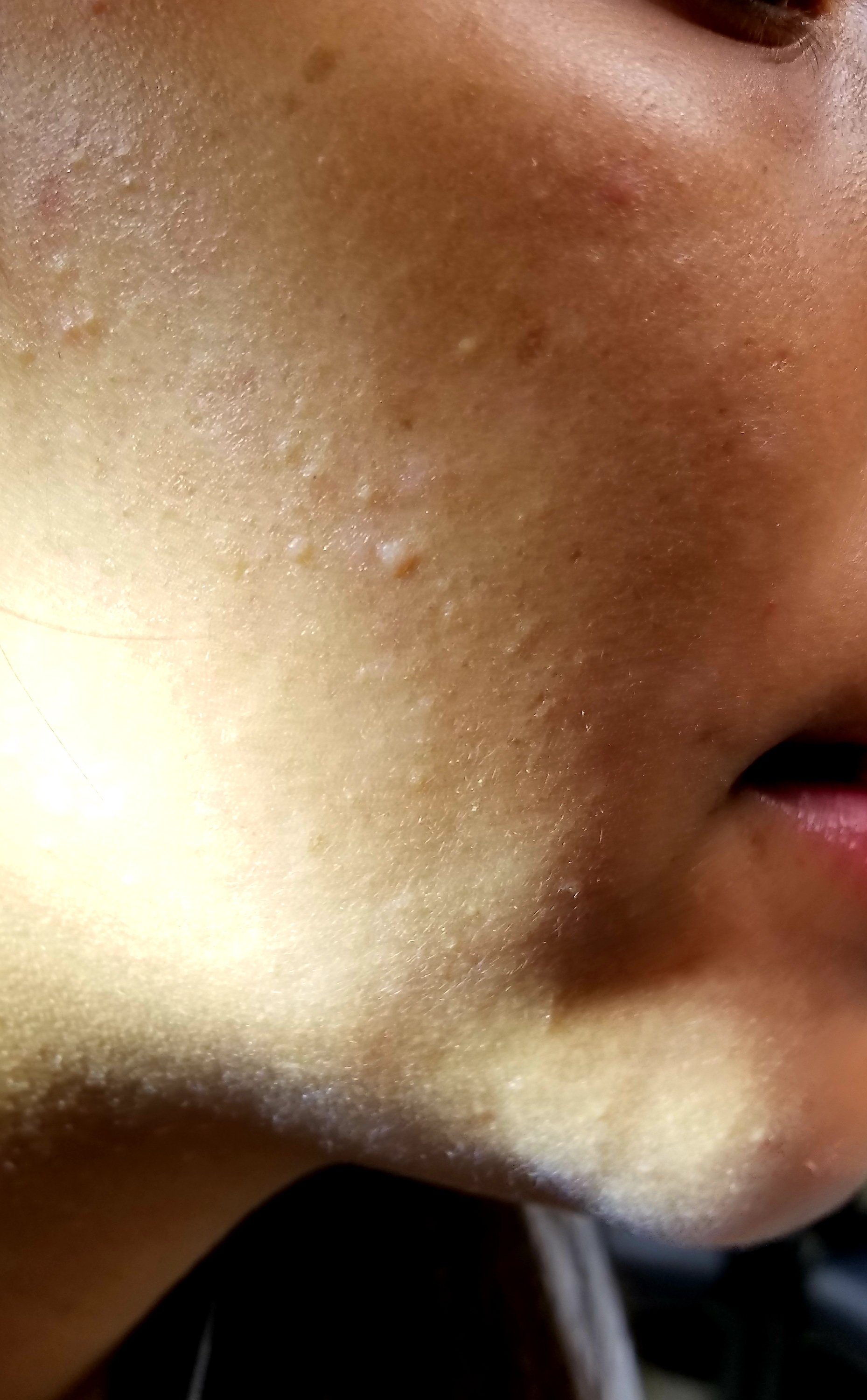
Flat warts are a subtype of wart caused (as are all true warts) by human papillomavirus (HPV). HPV types 3, 10, 28, and 49 predominate as causes of flat warts. Flat warts are also common on the legs, especially those of young women. Shaving, picking, and scratching can cause them to spread.
Flat warts can be difficult to eradicate, especially on the legs. Often, the patient has to cease shaving and use depilatory products or electric shavers instead. Any destructive modality will be effective (cryotherapy, electrodessication, acids, cantharidin) but can be problematic on the face because of the potential for scars or blemishes. Tretinoin and similar agents have been used with success due to their drying effects. These products have the added advantage of being completely painless. Light cryotherapy is somewhat painful but is a good alternative for persons who are unresponsive to lesser means.
Conditions in the differential diagnosis include sebaceous hyperplasia and syringoma, but these are typically found in older patients, while flat warts predominantly affect teens and young adults.